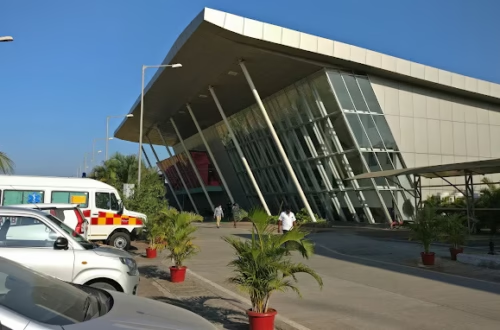
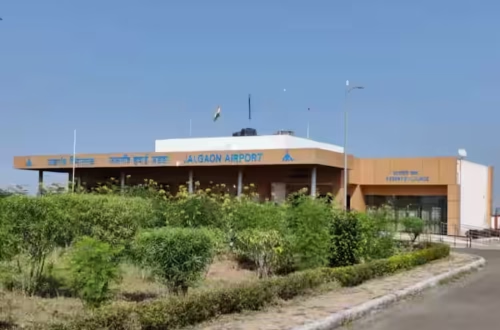
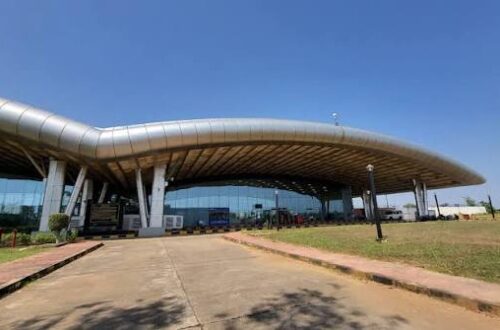
Gujarat’s first greenfield airport opened on 27 July 2023 — not in Ahmedabad, not in Surat, but at a village called Hirasar in Rajkot district, roughly 25 to 30 kilometres northeast of the city. Prime Minister Narendra Modi inaugurated Rajkot International Airport that day, and commercial operations began on 10 September 2023, the day after the old Rajkot Airport at Aji Dam (RAJ) flew its last passenger. Built at a cost of ₹1,405 crore across 2,534 acres of land, the airport has a single 3,040-metre runway, a 23,000-square-metre terminal with 2,800 peak-hour passenger capacity, and a cargo operation that recorded an 84.4% jump in tonnage in 2025–26. By mid-2026, it was handling 12.46 lakh passengers annually — a 14.6% increase year-on-year — firmly establishing itself as the Saurashtra region’s primary aviation hub.
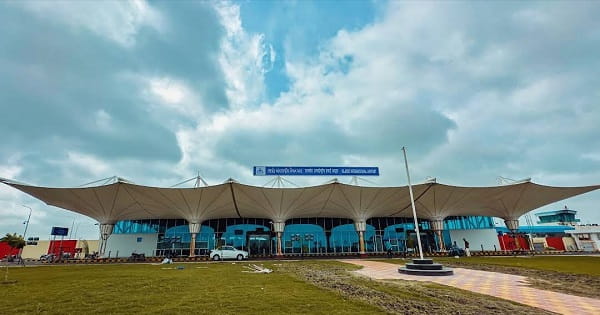
Quick Overview: Rajkot International Airport
| Detail | Information |
| Official Name | Rajkot International Airport |
| Also Known As | Hirasar Airport |
| Location | Hirasar village, Rajkot district, Gujarat |
| Airport Type | Public — International (Greenfield) |
| IATA Code | HSR |
| ICAO Code | VAHS |
| Owner/Operator | Airports Authority of India (AAI) |
| Inaugurated | 27 July 2023 (PM Modi) |
| Commercial Operations Began | 10 September 2023 |
| Total Land Area | 2,534 acres |
| Project Cost | ₹1,405 crore |
| Runway Length | 3,040 metres × 45 metres |
| Runway Designation | Code C (narrow-body and wide-body capable) |
| Apron | 334 m × 152 m; 10 Code-C + 4 Code-B aircraft bays |
| Terminal Area | 23,000 sq. metres |
| Peak-Hour Capacity | 2,800 passengers |
| Elevation | 654 ft / 199 m AMSL |
| Coordinates | 22°23′17″N, 71°01′42″E |
| Distance from Rajkot City | ~25–30 km northeast |
| Passengers (2025–26) | 12,46,996 (+14.6% YoY) |
| Cargo Tonnage (2025–26) | 1,121.8 tonnes (+84.4% YoY) |
| Current Airlines | IndiGo, Air India |
| Ground Transport | GSRTC electric buses; Ola/Uber taxis |
Rajkot International Airport Location: Hirasar on the Rajkot–Ahmedabad Corridor
Rajkot International Airport is located at Hirasar village, approximately 25 to 30 kilometres northeast of Rajkot city. The coordinates are 22°23′17″N, 71°01′42″E, at an elevation of 654 feet above mean sea level — considerably higher than most Gujarat airports, reflecting the inland plateau terrain of this part of Saurashtra away from the coastal fringe. The airport sits adjacent to National Highway 8B (NH-8B), the Rajkot–Ahmedabad corridor, giving it strong highway access.
The choice of Hirasar was driven by the impossibility of expanding the old Rajkot Airport (RAJ) at Aji Dam Road — a 236-acre site hemmed in by the city on all sides. Hirasar’s 2,534 acres on open agricultural land provided room for a 3,040-metre runway, a generous apron, expansion buffers, and long-term master-plan capacity that the old airport could never have accommodated.
Rajkot’s industrial identity — auto components, stainless steel utensils, gold jewellery, ceramics from nearby Morbi, diamond polishing from Saurashtra’s workshops, and brass hardware from Jamnagar — generates significant business and cargo demand. Morbi, India’s largest ceramic tile manufacturing cluster (which accounts for over 65% of India’s total ceramic output), is approximately 60 km from the airport and feeds both passenger and cargo traffic at HSR.
Rajkot International Airport Code: IATA HSR and ICAO VAHS
The airport’s IATA code is HSR and its ICAO code is VAHS. HSR is the correct booking identifier for all flights at Rajkot International Airport — travellers should use HSR, not RAJ (the old Rajkot Airport’s code), when searching for Rajkot flights on any airline or booking platform. VAHS places it in the VA western India block. The old airport’s codes (RAJ/VARK) remain in some databases but no longer correspond to active commercial operations.
Rajkot International Airport Terminal: Gujarat’s First Greenfield Terminal
The integrated terminal building at Rajkot International Airport covers 23,000 square metres and handles domestic and international operations under one roof. Designed for a peak-hour throughput of 2,800 passengers, it is built for significant expansion beyond initial capacity — the 2,534-acre site provides room for additional terminal phases, second runway, and long-term hub-scale development.
The terminal has multiple check-in counters serving IndiGo and Air India. Security screening lanes process domestic and international departures in separate streams. The departure lounge has air-conditioned seating, charging points, food and beverage outlets, and retail shops. International departures have dedicated customs and immigration processing — customs facilities were confirmed complete by 2025, with immigration capability established as part of the international terminal configuration.
The apron — 334 metres by 152 metres — can simultaneously park 10 Code-C aircraft (Airbus A320 and Boeing 737 class) and 4 Code-B aircraft (ATR-72 class). The 3,040-metre runway with 45-metre width is capable of handling wide-body aircraft operations, giving the airport genuine international connectivity potential beyond the Gulf routes currently operated.
Cargo operations began at Hirasar in 2024, and the 84.4% jump in cargo tonnage to 1,121.8 tonnes in 2025–26 reflects the growing use of the airport by Saurashtra’s export-oriented industries — particularly ceramics, brass hardware, and engineering goods.
Rajkot International Airport Connectivity: IndiGo, Air India and Gulf Routes
By Air: IndiGo and Air India are the two scheduled airlines operating from Hirasar as of mid-2026, between them accounting for all domestic departures. IndiGo operates the majority of flights — approximately 70% of departures — with Mumbai, Delhi, and Navi Mumbai among the primary routes. Air India serves key domestic trunk routes. Total aircraft movements in 2025–26 were 8,206 over the year. Gulf international connectivity — primarily Dubai and Sharjah via Air India Express — was in active development and operation, serving Saurashtra’s large NRI diaspora in the Gulf. An IndiGo service connecting Rajkot to Ganzhou, China, via Kolkata was under planning in September 2025. Confirm current international route status before booking, as Gulf schedule activation and China routing are subject to change.
By Road: GSRTC electric buses connect the airport to Rajkot Central Bus Port — the most budget-friendly option at approximately ₹100. Ola and Uber taxis are available at ₹500 to ₹900 for city-centre travel. Pre-paid taxis at the airport exit run ₹600 to ₹1,000. Travel time to central Rajkot is approximately 35 to 50 minutes depending on traffic and route. The NH-8B highway access makes the road corridor well-maintained.
By Rail: Rajkot Railway Station is the primary rail hub, approximately 30 km from the airport. The rail-then-taxi combination is used by passengers travelling to or from rail-connected destinations in Saurashtra and beyond.
Rajkot International Airport Amenities: Modern Greenfield Facilities
The 23,000-square-metre terminal provides amenities appropriate to a modern greenfield airport. Food and beverage outlets serve domestic and international passengers in the departure lounge. Retail shops carry travel essentials and regional merchandise. ATMs are available. Wi-Fi covers the terminal. Seating in the departure hall includes charging points. Wheelchair assistance is in place for passengers with mobility needs.
Business and premium lounges serve eligible passengers — diners and lounge access are available via airline membership, credit card tie-ups, and direct entry. Baggage trolleys are provided. Parking capacity is adequate for the current passenger volumes, with designated areas for short-term and long-term parking near the terminal entrance.
Security wait at peak morning hours averages 15 to 25 minutes. For domestic departures, arriving 90 minutes before departure is recommended; for international departures, 2.5 to 3 hours before is advisable.
FAQs: Rajkot International Airport
Q1. What is the IATA code for Rajkot International Airport?
A: The IATA code is HSR and the ICAO code is VAHS. The airport is officially named Rajkot International Airport and is also known as Hirasar Airport. Use HSR — not the old RAJ code — when booking Rajkot flights.
Q2. When did Rajkot International Airport open?
A: PM Modi inaugurated the airport on 27 July 2023. Commercial passenger operations commenced on 10 September 2023, the day after the old Rajkot Airport (RAJ) ceased scheduled service.
Q3. How far is Hirasar Airport from Rajkot city?
A: Approximately 25 to 30 km northeast of Rajkot city centre, connected via NH-8B. Travel time by cab is approximately 35 to 50 minutes.
Q4. Does Rajkot International Airport have international flights?
A: International Gulf routes — primarily Dubai and Sharjah — were active or in active development as of mid-2026, serving Saurashtra’s substantial NRI diaspora. Connections to China via Kolkata were under IndiGo planning. Confirm current international routes before booking.
Q5. What industries drive cargo traffic at Rajkot International Airport?
A: Saurashtra’s export economy — ceramic tiles from Morbi, brass hardware from Jamnagar, auto components and stainless-steel goods from Rajkot, and diamond polishing from the region’s workshops — drives cargo demand. Cargo tonnage at HSR jumped 84.4% year-on-year in 2025–26.