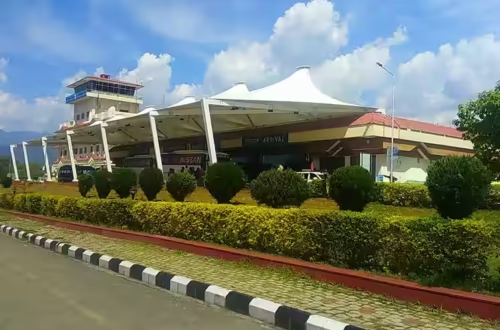
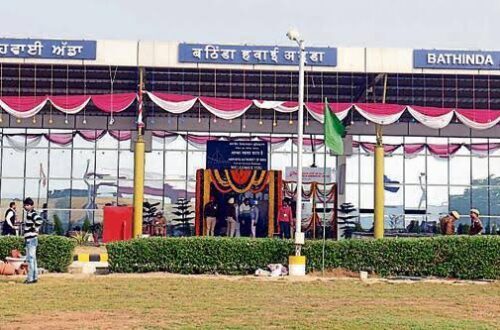
Bilaspur is Chhattisgarh’s second-largest city, the headquarters of the South East Central Railway zone, and a significant administrative and commercial hub for the coal belt of the state. It sits roughly 125 kilometres northeast of Raipur and has a population and economic profile that ought to sustain a well-connected airport. The reality at Bilasa Devi Kevat Airport is more complicated. Built by the Royal Indian Air Force in 1942 — making it the oldest airport in Chhattisgarh — the airport has had a frustratingly thin commercial aviation history punctuated by long dormant phases. It carries the name of Bilasa Bai Kevtin, a 16th-century figure from the Kevat fishing community of the Arpa river known for her courage against difficult circumstances — a name with genuine local resonance. The airport received its commercial licence for 72-seater aircraft only in January 2021, and as of 2026, Alliance Air remains the sole significant carrier, serving a handful of routes with ATR-72 aircraft while public frustration over lack of airline interest grows.
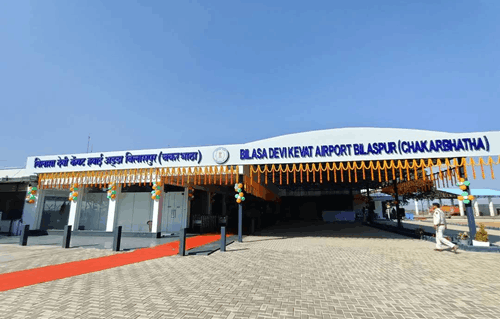
Quick Overview: Bilasa Devi Kevat Airport
| Detail | Information |
| Official Name | Bilasa Devi Kevat Airport |
| Also Known As | Bilaspur Airport |
| Location | Chakarbhata, Bilaspur, Chhattisgarh |
| Airport Type | Public — Domestic |
| IATA Code | PAB |
| ICAO Code | VEBU |
| Owner | Airports Authority of India (AAI) |
| Operator | Government of Chhattisgarh |
| Established | 1942 (RAF Station Bilaspur) |
| Runway Designation | 17/35 |
| Runway Length | 1,535 metres × 30 metres wide |
| Elevation | 274 m / 899 ft AMSL |
| Distance from City | ~10 km south of Bilaspur city centre |
| Passengers (2023–24) | 31,083 |
| Current Airline | Alliance Air (primary); FlyBig (seasonal) |
| Active Routes | Delhi, Kolkata, Jabalpur, Jagdalpur; seasonal Ambikapur |
Bilasa Devi Kevat Airport Location: Chakarbhata’s Coal Belt Setting
Bilasa Devi Kevat Airport is located at Chakarbhata, approximately 10 kilometres south of Bilaspur city centre. The airport address is P.O. Chakarbhata, Bilaspur, Chhattisgarh 495220. The elevation of 274 metres above mean sea level reflects the Chhattisgarh plateau terrain.
The airport’s position in Bilaspur places it within the coal belt of eastern Chhattisgarh, a region dominated by South East Central Railway operations, coal mining, and thermal power plants. The city’s commercial importance is significant — it is a major junction for rail traffic across central India, and its industrial footprint includes major steel, power, and coal sector enterprises. The case for better air connectivity is strong; the actual airline interest has remained frustratingly limited.
The airport was originally built as RAF Station Bilaspur by the Royal Indian Air Force in 1942 and used for World War II operations by No 267 Squadron, No 96 Squadron, No 10 Squadron, and others before closing in 1945. After Indian independence, it transferred to the Indian government and saw sporadic use. Vayudoot operated flights to Bhopal, Nagpur, Mumbai, and Delhi in the 1980s, then the airport returned to dormancy before the current UDAN-era revival.
Bilasa Devi Kevat Airport Code: IATA PAB and ICAO VEBU
The airport’s IATA code is PAB and its ICAO code is VEBU. PAB is the booking identifier used across airline platforms for Bilaspur. VEBU places the airport in the VE central India block. The airport was granted its commercial DGCA licence for 19-seater aircraft in December 2018, followed by a licence for 72-seater aircraft in January 2021 — a step that enabled ATR-72 operations and transformed the airport’s commercial potential.
Bilasa Devi Kevat Airport Terminal: Small Building Serving a Restrained Route Network
Bilasa Devi Kevat Airport operates from a single passenger terminal, accompanied by an Air Traffic Control tower and one runway. The terminal is compact — sized appropriately for an airport that handled approximately 31,000 passengers in 2023–24 across about 830 aircraft movements. It provides basic check-in counters, security screening, a passenger waiting area, and baggage claim. Duty-free stores, water fountains, currency exchange, parking, and interactive maps are noted in airline terminal guides. Comfortable seating is available in the departure lounge.
The runway at 1,535 metres × 30 metres has turning pads at both ends and is approved for ATR-72 operations. It does not accommodate narrow-body jets of the Airbus A320 or Boeing 737 class, which limits the airline and route options available to the airport significantly — no major low-cost carrier using single-aisle jets can serve Bilaspur without a longer runway.
A pending and contentious issue is the Indian Army’s intent to take over the airport to establish a special forces training facility, with the commando training base from Nahan (Himachal Pradesh) proposed to be relocated here. The Army wants the entire airport; AAI has conditionally offered 377 acres while retaining 56 acres for a civil enclave. This unresolved situation adds uncertainty to the airport’s long-term commercial aviation future.
Bilasa Devi Kevat Airport Connectivity: Alliance Air and the 2026 Summer Schedule Gap
By Air: Alliance Air is the only significant scheduled commercial carrier at Bilaspur Airport as of mid-2026. Routes include Delhi, Kolkata, Jabalpur, and Jagdalpur, all operated with ATR-72 aircraft. FlyBig operates a seasonal Bilaspur–Ambikapur route from approximately March to May. The summer 2026 schedule brought no new routes — the Prayagraj frequency was actually cut — triggering public protests from the city’s airport advocacy committee. The total weekly departures remain modest for a city of Bilaspur’s size and economic profile.
By Road: The airport is approximately 10 km from the city centre, with taxi and cab services connecting the two in about 20 minutes. The compact city and absence of heavy metro traffic makes road access to the airport relatively straightforward. Private vehicles and local taxis are the primary ground transport options.
By Rail: Bilaspur Junction is one of the most strategically important railway junctions in India, serving as the headquarters of South East Central Railway. It connects to Mumbai, Kolkata, Delhi, Raipur, Nagpur, and virtually all major cities on the central and east-central rail network. For most travellers between Bilaspur and nearby cities, rail is actually a more practical option than the thin airline schedule. The station is approximately 10 km from the airport.
Nearest Major Airport: Swami Vivekananda Airport in Raipur (RPR) is approximately 125 km southwest — the main aviation hub for Chhattisgarh serving jet-class aircraft and major carriers.
Bilasa Devi Kevat Airport Amenities: Basic Facilities at a Compact Regional Terminal
The terminal provides the essential services for a regional domestic airport. Duty-free shopping is available within the terminal. Water fountains and currency exchange facilities are in place. Comfortable seating in the departure lounge covers basic waiting comfort. Interactive terminal maps help with navigation, though the terminal’s compact size makes this largely intuitive. Parking is available near the terminal for private vehicles.
There are no premium commercial lounges, no multi-cuisine food courts, and no hotel on airport grounds. Travellers should plan meals before arriving, as food options within the terminal are limited. Ground transport from the airport is by local taxi — no app-based cab services comparable to larger cities operate formally from this terminal.
FAQs: Bilasa Devi Kevat Airport
Q1. What is the IATA code for Bilasa Devi Kevat Airport?
A: The IATA code is PAB and the ICAO code is VEBU. The airport is also known as Bilaspur Airport and is located at Chakarbhata, 10 km south of Bilaspur city.
Q2. Which airlines and routes currently operate from Bilaspur Airport?
A: Alliance Air operates flights to Delhi, Kolkata, Jabalpur, and Jagdalpur using ATR-72 aircraft. FlyBig runs a seasonal Bilaspur–Ambikapur service from March to May. Verify current schedules before booking as routes change.
Q3. Is there a threat to the airport’s future from Indian Army plans?
A: Yes. The Indian Army has proposed taking over Bilaspur Airport for a special forces training facility. AAI has conditionally offered 377 acres while retaining 56 acres for a civil enclave. This issue remains unresolved as of mid-2026.
Q4. Why can’t larger aircraft like Airbus A320 land at Bilaspur Airport?
A: The runway is 1,535 metres long — shorter than the minimum required for narrow-body jet operations. This restricts the airport to ATR-72 class turboprops and limits the airlines that can operate here commercially.
Q5. What is the nearest major airport to Bilaspur?
A: Swami Vivekananda Airport in Raipur (RPR) is approximately 125 km away and serves as the primary Chhattisgarh aviation hub with jet-class flights and major airlines.