North Lakhimpur district occupies a stretch of upper Assam where the Brahmaputra’s north bank meets the foothills of Arunachal Pradesh. It is a geography where road and river travel can be slow, unpredictable, and monsoon-dependent. Lilabari Airport — also known as North Lakhimpur Airport — provides the fastest way out and the fastest way in for residents of this region, as well as for those travelling toward the interior districts of Arunachal Pradesh. Small in scale and quiet on most days, it nonetheless plays a role that a larger airport in a more accessible city would not fully substitute. Its history includes service as an Indian Air Force forward operating base during the 1962 Sino-Indian War, giving it a strategic depth that its modest current traffic numbers do not obviously convey.

Quick Overview: Lilabari Airport
| Detail | Information |
| Airport Name | Lilabari Airport |
| Also Known As | North Lakhimpur Airport |
| Location | Lilabari, North Lakhimpur, Assam |
| Airport Type | Public — Domestic |
| IATA Code | IXI |
| ICAO Code | VELR |
| Operator | Airports Authority of India (AAI) |
| Terminal Inaugurated | 2003 |
| Total Land Area | Not formally published; modest footprint |
| Elevation | 330 ft / 101 m AMSL |
| Coordinates | 27°17′44″N, 94°05′52″E |
| Distance from North Lakhimpur | ~8 km north of city centre |
| Passengers (2024–25) | 30,108 |
| Active Routes | Kolkata, Shillong (primary); regional northeast |
Lilabari Airport Location: North Bank of the Brahmaputra in Lakhimpur District
Lilabari Airport is located at Lilabari, approximately 8 kilometres north of North Lakhimpur city centre in Lakhimpur district, Assam. The airport’s coordinates place it at 27°17′44″N, 94°05′52″E, and its elevation of 330 feet above mean sea level reflects the flat alluvial plain terrain of the Brahmaputra’s north bank.
North Lakhimpur sits in a part of Assam that is effectively bracketed between major rivers and geographically isolated from faster surface transport corridors. The district borders Dhemaji to the east, the Brahmaputra to the south, and Arunachal Pradesh to the north — a configuration where the airport is not supplementing surface travel options but often replacing them for time-sensitive journeys. The airport also serves as a transit point for those heading into the western districts of Arunachal Pradesh, particularly the areas accessible from this northern Assam corridor.
Its strategic significance in national security terms is not incidental. During the 1962 Sino-Indian War, Lilabari Airfield served as a forward operating base for the Indian Air Force, used for airlift, surveillance, and logistical support along the northeast frontier. In the decades that followed, it continued to support IAF operations as a quiet but operationally relevant asset in a sensitive border region.
Lilabari Airport Code: IATA IXI and ICAO VELR
Lilabari Airport’s IATA code is IXI and its ICAO code is VELR. IXI is used across airline booking systems and travel platforms for all flights to and from North Lakhimpur. VELR places the airport in the VE block for eastern India and the northeast. The airport appears in booking systems under both Lilabari Airport and North Lakhimpur Airport — both names are in active use and refer to the same facility.
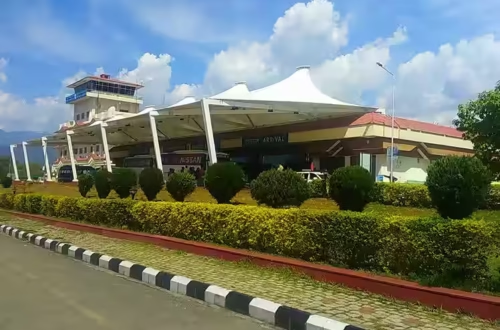
Lilabari Airport Terminal: A 2003 Regional Building Still Serving the District
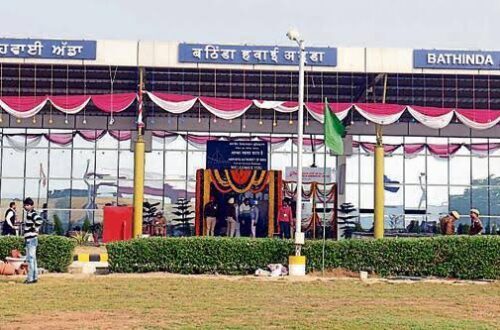
The terminal at Lilabari Airport was inaugurated in 2003, developed following sustained lobbying by local Member of Parliament Dr Ranee Narah between 1999 and 2003, and commissioned by the then Union Civil Aviation Minister Syed Shahnawaz Hussain. Before that inauguration, North Lakhimpur had no permanent passenger terminal despite the airstrip’s long military history.
The terminal is modest in scale — appropriate for an airport handling around 30,000 passengers annually. It provides check-in counters, security screening, a waiting area, and basic baggage handling. The building follows the standard compact regional terminal format where all functions occupy a single structure and passenger flows are simple and linear.
Aircraft operations here support ATR-class turboprop aircraft. The runway is functional for the type of regional connectivity North Lakhimpur generates, though discussions about improving infrastructure to support larger aircraft have periodically been raised in the context of Arunachal Pradesh connectivity development.
For North Lakhimpur residents, government officials, medical travellers, and defence-related personnel, the terminal provides the minimum required for a functional air connection — without the retail, dining, or lounge infrastructure of larger airports.
Lilabari Airport Connectivity: Routes, Airlines and Regional Importance
By Air: Current routes from Lilabari Airport connect North Lakhimpur to Kolkata and Shillong as primary destinations, with occasional additional northeast regional connections. The airport handled 30,108 passengers in 2024–25, reflecting a 16.8% growth over the previous year — a positive trajectory for a small regional airport. There are approximately 4 flights per week on 3 routes based on recent schedules. Alliance Air and regional carriers have operated services here under the UDAN scheme. Current schedules should be confirmed with airlines before booking, as northeast regional routes can change with little notice.
By Road: Taxis, local buses, and private vehicles connect the airport to North Lakhimpur city and surrounding areas. Travel time from the airport to the city centre is short — approximately 15 to 20 minutes given the 8-kilometre distance. Road connectivity in Lakhimpur district links the area to Dhemaji, Lakhimpur, and further toward the Arunachal Pradesh border, though river crossings can add time during high flood seasons.
By Rail: Lakhimpur district does not have a direct broad-gauge railway connection of the same calibre as cities along the main Assam rail corridor. The nearest major rail hub is North Lakhimpur town, which has limited connectivity; passengers needing broader rail access typically route through Guwahati or Dibrugarh.
Nearest Major Airports: Jorhat Airport (JRH) at approximately 90 km and Dibrugarh Airport (DIB) at around 73 km (from Tezu direction) are the nearest airports with broader connectivity. For international travel, Guwahati’s LGBIA remains the gateway.
Lilabari Airport Amenities: Functional Basics for a North Bank Regional Airport
Lilabari Airport’s amenity profile is what one expects from a 2003-era small regional terminal that serves roughly 30,000 passengers per year. Basic check-in, security, and baggage handling are operational. Limited parking facilities exist near the terminal for private vehicles. The airport is accessible by road from Lilabari and nearby towns using taxis, buses, and private vehicles.
There are no commercial lounges, no restaurant chains, no duty-free retail, and no app-based ground transport services at Lilabari. The airport functions at a level appropriate for a facility where most passengers are local residents, government officials, or defence-related travellers making short regional hops, rather than leisure tourists building airport dwell time into their journeys.
The airport’s significance to the region it serves is entirely out of proportion to its physical scale. For a district that sits at the geographic margins of northeast India’s major transport corridors, a functioning airport with regular service to Kolkata and Guwahati is a meaningful economic and logistical asset — one that the UDAN scheme’s regional connectivity mandate has helped sustain.
FAQs: Lilabari Airport
Q1. What is the IATA code for Lilabari Airport?
The IATA code is IXI and the ICAO code is VELR. The airport is also known as North Lakhimpur Airport, located 8 km north of North Lakhimpur city.
Q2. Which airlines and routes operate from Lilabari Airport?
Services connect North Lakhimpur to Kolkata and Shillong as primary routes, with regional northeast connections. Alliance Air operates here under the UDAN scheme. Schedules should be confirmed with airlines before travel.
Q3. How many passengers does Lilabari Airport handle annually?
The airport handled 30,108 passengers in 2024–25, a 16.8% increase over the previous year, reflecting steady growth in regional air travel demand.
Q4. What was the military significance of Lilabari Airport?
During the 1962 Sino-Indian War, Lilabari Airfield served as an IAF forward operating base for airlift, surveillance, and logistical support along the northeast frontier. It continued as a strategically relevant facility for IAF operations in subsequent decades.
Q5. How was Lilabari Airport developed?
The airport was developed following sustained lobbying by local MP Dr Ranee Narah from 1999 to 2003. The terminal was inaugurated by Union Civil Aviation Minister Syed Shahnawaz Hussain after construction completed in 2003.