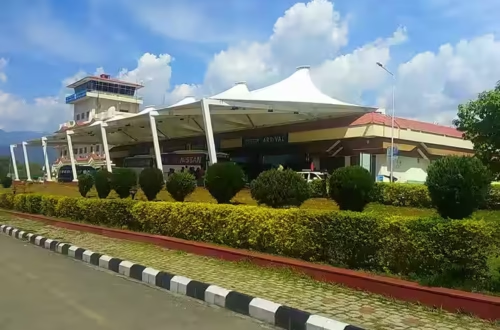
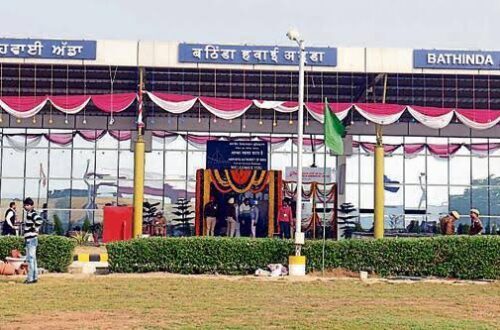
The Seemanchal and Kosi belt of north-eastern Bihar — the districts of Purnia, Katihar, Araria, and Kishanganj — has been among India’s more connectivity-deprived regions. Cut off by rivers, flood-prone terrain, and limited infrastructure, the area has historically had little air access. Purnia Airport changed that when it opened for commercial operations on 15 September 2025, becoming one of India’s newest civilian aviation facilities. Built on an Indian Air Force station at Goasi (Chunapur), the airport operates as a civil enclave under the UDAN regional connectivity scheme and represents the first time Purnia and its surrounding Seemanchal region has had consistent scheduled air service in the modern era.
Quick Overview: Purnia Airport
| Detail | Information |
| Official Name | Purnia Airport (also spelled Purnea Airport) |
| Location | Goasi (Chunapur), Purnia, Bihar |
| Serves | Purnia and Seemanchal/Kosi subregion; also Katihar |
| Airport Type | Military/Public — Domestic (Civil Enclave) |
| IATA Code | PXN |
| ICAO Code | VEPU |
| Owner | Indian Air Force |
| Operator | Airports Authority of India (AAI) |
| Commercial Operations Commenced | 15 September 2025 |
| Terminal Area | ~3,000 sq. metres (interim) |
| Peak Capacity | ~300 passengers |
| Check-in Counters | ~6 |
| Runway Designation | 09/27 |
| Runway Length | ~9,000 ft (approx. 2,743 m) |
| Elevation | 39 m / 129 ft AMSL |
Purnia Airport Location: Western Outskirts of Purnia on the Bihar-Bengal Border
Purnia Airport is located at Goasi (Chunapur) on the western section of Purnia city, in the Chunapur Air Force Station complex. The coordinates are 25°45′35″N, 87°24′36″E, at an elevation of 39 metres above mean sea level — consistent with the flat, alluvial Ganga plain terrain of north-eastern Bihar.
Purnia district sits close to the border with West Bengal and not far from Nepal, making it a geographic crossroads with substantial trade and migration flows. The Kosi river system — notorious for its devastating floods and frequent course changes — defines much of the district’s geography and has historically limited permanent infrastructure investment. The airport’s position at Chunapur Air Force Station on the city’s western fringe keeps it accessible from the main urban areas while situating it within the security perimeter of an established military base.
The airport is expected to serve not just Purnia but Katihar, Araria, Kishanganj, and parts of neighbouring Jharkhand and West Bengal — a wide catchment that has had no local air connectivity for decades.
Purnia Airport Code: IATA PXN and ICAO VEPU
The airport’s IATA code is PXN and its ICAO code is VEPU. PXN was assigned to Purnia Airport ahead of its September 2025 commercial launch — with booking platforms opening for flights from approximately 2 September 2025 ahead of the 15 September inauguration. VEPU places the airport in the VE eastern India block. Some older or unofficial sources have listed different code combinations for Purnia, but PXN and VEPU are the confirmed official codes currently in use.
Purnia Airport Terminal: Interim Prefabricated Building Under the UDAN Scheme
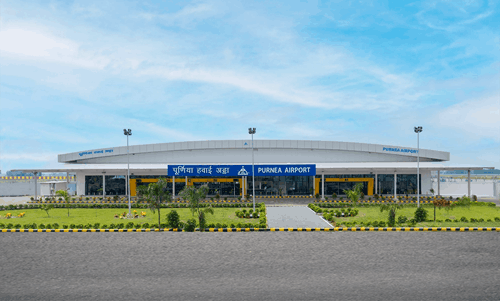
The terminal at Purnia Airport is an interim prefabricated structure covering approximately 3,000 square metres, developed at a cost of approximately ₹33 to 34 crore under AAI’s civil enclave development programme. It was built alongside the formal signing of a Memorandum of Understanding between the Bihar government and AAI in June 2024 for the construction of the civil enclave on approximately 52.18 acres of IAF land.
The terminal features approximately six check-in counters, basic security screening, a passenger waiting area, and two boarding gates in its initial phase. The interiors incorporate regional art integrations — including Manjusha paintings from Bhagalpur and Madhubani art motifs — giving the space a cultural identity rooted in north Bihar’s rich artistic traditions.
The runway at 9,000 feet (approximately 2,743 metres) is well-suited for narrow-body commercial operations. The long runway — a product of its IAF station heritage — gives the airport better aircraft accommodation than many newly opened UDAN airports that have shorter, custom-built strips.
Expansion provisions are built into the design: additional boarding gates and baggage belts are planned as traffic grows. A permanent, larger terminal is the long-term development intent, though no construction timeline for that phase has been publicly confirmed.
Purnia Airport Connectivity: Delhi, Kolkata Routes and Regional Reach
By Air: Commercial operations commenced on 15 September 2025 with initial services to Delhi and Kolkata under the UDAN scheme. Airlines including IndiGo have been associated with UDAN-phase operations at Purnia, with the airport also attracting interest from carriers for Hyderabad, Ahmedabad, Bengaluru, and Mumbai routes. The UDAN bidding and route assignment process governs which routes are actively operational at any given time — current active schedules and airlines should be verified on booking platforms before travel, as UDAN routes are among the most variable in India’s domestic network.
By Road: The airport is located on the western outskirts of Purnia, accessible by local taxis and private vehicles. Road connectivity from Purnia city centre to the terminal takes approximately 15 to 20 minutes under normal conditions. No dedicated airport bus service is noted. App-based cab services have limited penetration in Purnia relative to larger Bihar cities.
By Rail: Purnia Junction is an important railway station in north-eastern Bihar with connections toward Katihar — a major junction on the Assam Rail Link — and further toward Guwahati, Kolkata, and the broader northeast. Rail travel has historically been the primary long-distance option for Purnia residents, making the airport’s UDAN flights a meaningful time-saving alternative.
Nearest Major Airport: Jay Prakash Narayan Airport in Patna (PAT) is the nearest major aviation hub, roughly 270 km west. Darbhanga Airport (DBR) is approximately 120 km southwest, and Bagdogra Airport in West Bengal is accessible from the east.
Purnia Airport Amenities: Practical Basics at an Interim Civil Enclave
Purnia Airport’s amenity profile reflects the realities of a newly opened interim terminal built primarily to enable UDAN connectivity rather than premium passenger experience. Basic check-in counters, security screening, a waiting area with seating, and restroom facilities cover the essentials.
The regional art integrations — Manjusha and Madhubani motifs — give the terminal a distinctive aesthetic identity unusual for an interim facility, and signal the intent to create a culturally rooted airport experience from the outset rather than retrofitting identity later.
There are no commercial lounges, duty-free shops, or restaurant chains at the interim terminal. Basic refreshment and snack options are expected as the terminal ramps up, but the overall amenity scale is appropriate for a new UDAN airport in its first operational year. Ground transport from the terminal is by local taxi; pre-paid taxi counters or app-based services are not formally structured at this early stage.
FAQs: Purnia Airport
Q1. What is the IATA code for Purnia Airport?
The IATA code is PXN and the ICAO code is VEPU. The airport is located at Goasi (Chunapur), Purnia, Bihar, and operates as a civil enclave within the Chunapur Air Force Station.
Q2. When did Purnia Airport open for commercial flights?
Commercial operations commenced on 15 September 2025, making it one of India’s newest UDAN-scheme airports. Flight bookings opened around 2 September 2025.
Q3. Which cities are connected by flights from Purnia Airport?
Initial services connect Purnia to Delhi and Kolkata, with airlines also assessing routes to Hyderabad, Ahmedabad, Bengaluru, and Mumbai. Current active routes must be confirmed on booking platforms before travel.
Q4. What makes Purnia Airport historically significant for the region?
The Seemanchal and Kosi belt has had almost no consistent commercial air service for generations. Purnia Airport is the first modern civil enclave serving this geography, giving north-eastern Bihar’s residents direct air connectivity for the first time in the contemporary aviation era.
Q5. What are the future development plans for Purnia Airport?
The current interim terminal of ~3,000 sq. metres is a first phase. A permanent terminal with expanded capacity is the long-term plan. The runway’s existing 9,000-foot length is already suitable for narrow-body aircraft, providing a strong operational foundation for the airport’s development.