
Imphal has a density of history that few Indian state capitals can match. The city witnessed the Battle of Imphal in 1944 — one of the most significant Allied victories of World War II, where Indian and British forces withstood a Japanese siege that, had it succeeded, would have opened the route to mainland India. The same airfield that supplied those defenders now serves as Manipur’s primary aviation gateway. Bir Tikendrajit International Airport — renamed in 2019 from Tulihal International Airport in honour of the Meitei prince and revolutionary who led armed resistance against the British annexation of Manipur in 1891 — carries IATA code IMF and ICAO code VEIM, handled 14.06 lakh passengers in 2024–25, and ranks as the third-busiest airport in Northeast India. IndiGo, Air India Express, and Alliance Air operate from here across a network of nine domestic destinations, with Guwahati and Kolkata as the dominant routes.
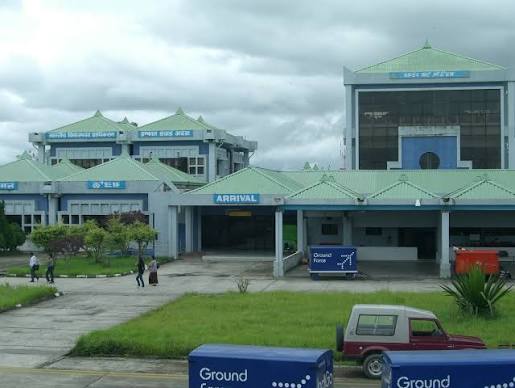
Quick Overview: Bir Tikendrajit International Airport
| Detail | Information |
| Official Name | Bir Tikendrajit International Airport |
| Also Known As | Imphal Airport; Tulihal Airport |
| Location | Tulihal, Imphal, Manipur, India |
| Airport Type | Public — International |
| IATA Code | IMF |
| ICAO Code | VEIM |
| Owner | Government of Manipur |
| Operator | Airports Authority of India (AAI) |
| Renamed | 2019 (from Tulihal International Airport) |
| Established | World War II era (1944 area); civilian use from 1959 |
| Total Area | ~516 hectares (~5.16 sq. km) |
| Check-in Counters | 10 |
| Elevation | 774 m / 2,540 ft AMSL |
| Coordinates | 24°45′36″N, 93°53′48″E |
| Distance from City Centre | ~7–8 km south |
| Passengers (2024–25) | 14,06,227 (+10.3% YoY) |
| Aircraft Movements (2024–25) | 12,385 (+3.7% YoY) |
| Cargo Tonnage (2024–25) | 6,199 tonnes (+38.5% YoY) |
| Current Airlines | IndiGo, Air India Express, Alliance Air |
| Top Routes | Guwahati (37 weekly), Kolkata (36 weekly), Delhi (11 weekly) |
| International Status | Yes (customs/immigration infrastructure present) |
Imphal Airport Location: Tulihal, South of the Valley Capital
Bir Tikendrajit International Airport is located at Tulihal, approximately 7 to 8 kilometres south of Imphal city centre. The coordinates are 24°45′36″N, 93°53′48″E, at an elevation of 774 metres above sea level — the Imphal Valley floor, which is itself elevated well above the surrounding hill ranges of the Manipur highlands. The valley’s flat floor made Tulihal a natural choice for wartime and post-war civilian airfield development.
Imphal’s geographic context gives the airport strategic significance beyond ordinary regional connectivity. Manipur shares a border with Myanmar to the east, and Imphal sits within the operational zone of India’s Act East Policy — the diplomatic and economic push to strengthen ties with Southeast Asia. The airport’s international designation is directly relevant to this: international flights to Myanmar (Mandalay, operated by charter) and potential Southeast Asian connections represent the airport’s strategic aviation potential, not just its domestic utility.
The Kangla Fort — the ancient royal palace complex and one of the most significant historical sites in Northeast India — is within Imphal city, approximately 8 km from the airport. Loktak Lake, India’s largest freshwater lake and home to the floating Phumdis (biomass islands), is approximately 50 km south.
Imphal Airport Code: IATA IMF and ICAO VEIM
The IATA code is IMF and the ICAO code is VEIM. IMF is the booking identifier for Imphal across all airline platforms. VEIM places it in the VE eastern India block. The airport was renamed Bir Tikendrajit International Airport in 2019 to honour Prince Tikendrajit Singh — the Senapati (commander) of Manipur who led armed resistance against the British annexation in 1891, was tried for the death of British political agent J.W. Quinton, and was publicly hanged in Imphal’s Polo Ground in August 1891. He is widely regarded as a martyr and freedom fighter in Manipur. The renaming was not without controversy — some Naga organisations in neighbouring Nagaland demanded revocation of the resolution, citing regional political sensitivities.
Imphal Airport Terminal: Refurbished Single Building, Expansion Underway
Bir Tikendrajit International Airport operates from a single integrated terminal building handling both domestic and international operations. The terminal has 10 check-in counters and covers a total area of approximately 516 hectares across the airport site. The terminal was refurbished in recent years, improving the passenger experience with cleaner layouts, modern check-in rows, and adequate security screening capacity. The departure concourse has reasonable seating for the passenger volumes the airport handles.
The WWII history is present in the airport’s DNA. The Tulihal Airfield was a critical supply and air superiority base during the 1944 Battle of Imphal, when Japanese forces besieged the city for 88 days. The Allied ability to fly in supplies to Imphal was decisive in sustaining the garrison. The present airport is the civilian successor to that wartime facility; its current terminal, while functional, is at capacity during peak hours.
A significant expansion project is underway. AAI is developing a new terminal building and expanded airside infrastructure to meet rising demand — 14.06 lakh passengers in 2024–25 represents a 10.3% year-on-year growth and steady trajectory toward the airport’s capacity ceiling. The cargo growth of 38.5% to 6,199 tonnes is particularly striking, reflecting the expansion of perishable and manufactured goods movement from Manipur. No confirmed completion date for the new terminal has been announced publicly as of mid-2026.
Imphal Airport Connectivity: Northeast India’s Third-Busiest Hub
By Air: IndiGo, Air India Express, and Alliance Air are the three scheduled commercial airlines at Imphal. IndiGo connects Imphal to Agartala, Bengaluru, Delhi, Guwahati, Kolkata, and Shillong. Air India Express flies to Delhi, Guwahati, and Siliguri. Alliance Air connects Aizawl, Dimapur, Guwahati, Kolkata, Silchar, and Tezu. Guwahati leads all routes with 37 weekly departures, followed closely by Kolkata with 36 weekly. Delhi comes third with 11 weekly flights — the long-distance trunk route. The Northeast connectivity — Aizawl, Dimapur, Tezu, Shillong, Agartala, Silchar — reflects Imphal’s role as a regional hub for Manipur’s bordering states.
By Road: Pre-paid taxis from the airport to central Imphal take 20 to 30 minutes via Porompat and the main Imphal roads, at fares of ₹150 to ₹300. Auto-rickshaws are available at ₹50 to ₹150 for shorter distances. Ola and Uber have limited but growing presence. NH-37 and NH-102 connect Imphal to Kohima (Nagaland), Churachandpur, and other Manipur districts.
By Rail: Imphal does not yet have a functional railway station. The Northeast Frontier Railway’s ongoing project to extend broad-gauge rail to Imphal from Jiribam (via the world’s tallest rail bridge over the Ijai River) is under advanced construction but was not yet operational as of mid-2026. Until the railway reaches Imphal, aviation is the only fast-access mode from outside Manipur, making the airport’s role genuinely non-substitutable.
Imphal Airport Amenities: Functional Gateway With Growing Capacity
The refurbished terminal provides the core amenities a regional international airport requires. Check-in counters handle three airlines. Security screening is in place. The departure lounge has seating and charging availability, though power outlet density is modest — charging before arrival is advisable. Food stalls and snack kiosks serve regional cuisine and standard café items. A gift shop carries local Manipuri handicrafts — including the hand-loom products and bamboo work that Manipur is known for.
Free trolleys are available. ATMs and cash machines are operational. Free medical facilities are in place. Child care rooms are accessible. A wheelchair facility is provided. A tourist information centre serves arriving visitors. The terminal has a tourist counter covering Manipur’s distinctive attractions — Loktak Lake, the Keibul Lamjao floating national park (the only floating national park in the world), Khonghampat Orchidarium, and the various heritage sites around the Kangla Fort.
FAQs: Bir Tikendrajit International Airport
Q1. What is the IATA code for Imphal Airport?
The IATA code is IMF and the ICAO code is VEIM. The airport’s full official name is Bir Tikendrajit International Airport, located at Tulihal approximately 7 to 8 km south of Imphal city.
Q2. Who was Bir Tikendrajit Singh and why is the airport named after him?
Prince Tikendrajit Singh was the Senapati (military commander) of Manipur who led armed resistance against the British annexation of Manipur in 1891. Tried by a British court and publicly hanged in Imphal on 13 August 1891, he is venerated as a martyr and national hero in Manipur. The airport was renamed in his honour in 2019.
Q3. What is Imphal Airport’s historical significance?
Tulihal Airfield played a critical role in the 1944 Battle of Imphal — one of WWII’s decisive battles — where Allied forces relied on air supply to withstand an 88-day Japanese siege. The present airport is the civilian successor to that wartime facility.
Q4. Is there railway connectivity to Imphal Airport?
No. Imphal city does not yet have a functioning broad-gauge railway connection. A Northeast Frontier Railway project to extend rail to Imphal via Jiribam and the world’s tallest railway bridge is under construction but was not operational as of mid-2026. Aviation is currently the only fast-access transport mode.
Q5. What are the best tourist attractions near Imphal Airport?
Loktak Lake (approximately 50 km south, with the unique Keibul Lamjao Floating National Park), Kangla Fort in Imphal city (8 km), Khonghampat Orchidarium, the INA Memorial at Moirang, and the War Cemeteries from the 1944 battle are the primary attractions near the airport.


