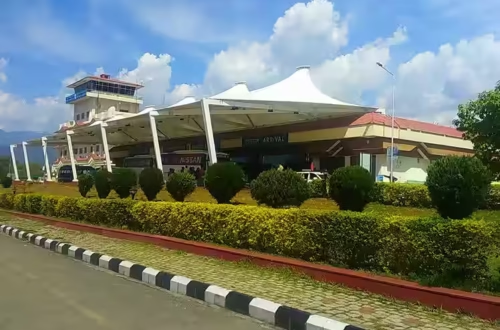
Guwahati is not simply a city — it is the eastern anchor of mainland India’s connection to its most strategically significant and scenically distinct region. All seven northeastern states flow through it in some sense: by road, by rail, and increasingly by air. Lokpriya Gopinath Bordoloi International Airport, named after Assam’s first Chief Minister and independence activist, is the primary aviation gateway to this entire geography. In February 2026, it entered a new chapter — a brand-new Terminal 2, inaugurated by Prime Minister Narendra Modi in December 2025 and opened for commercial operations on 22 February 2026, pushed annual passenger capacity to 13.1 million and gave the northeast a terminal worthy of its growing role as an aviation hub connecting the region to mainland India and Southeast Asia.
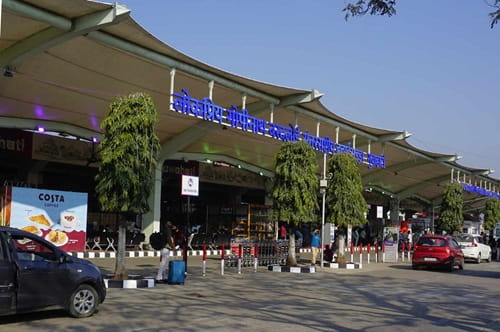
Quick Overview: Lokpriya Gopinath Bordoloi International Airport
| Detail | Information |
| Official Name | Lokpriya Gopinath Bordoloi International Airport (LGBIA) |
| Also Known As | Guwahati Airport / Borjhar Airport |
| Location | Borjhar, Guwahati, Assam |
| Airport Type | Public/Military — International |
| IATA Code | GAU |
| ICAO Code | VEGT |
| Owner | Airports Authority of India |
| Operator | Guwahati International Airport Limited (Adani Airport Holdings) |
| Opened | 1958 |
| New Terminal (T2) Inaugurated | 20 December 2025 |
| T2 Commercial Operations Started | 22 February 2026 |
| T2 Area | 1,40,000 sq. metres |
| Combined Annual Capacity | 13.1 million passengers |
| Elevation | 49 m / 162 ft AMSL |
| Distance from City Centre | ~20–28 km |
| Daily Aircraft Movements | 130+ |
| Passengers (2025–26) | 66,22,784 |
| International Routes | Bangkok, Paro (Bhutan), Singapore |
| Domestic Destinations | 21 cities |
LGBIA Location: Borjhar Between Guwahati and Dispur
Lokpriya Gopinath Bordoloi International Airport is located at Borjhar, approximately 20 to 28 kilometres from Guwahati’s city centre and 26 kilometres from Dispur, Assam’s state capital. The distance varies depending on which part of the city you measure from — Guwahati is a long, linear city following the south bank of the Brahmaputra, so travel time from different neighbourhoods ranges considerably.
The airport sits at an elevation of 49 metres above mean sea level on the Assam plains, with the Brahmaputra river valley defining the broader landscape. Originally established as a military airbase during World War II and converted to civilian use in 1958, it was initially known as Borjhar Airport before being renamed in honour of Gopinath Bordoloi. The airport serves not just Guwahati and Dispur but functions as the primary entry and exit point for all of northeast India — flights to Itanagar, Aizawl, Imphal, Agartala, Dimapur, and other northeastern capitals typically route through Guwahati for connections.
LGBIA Airport Code: IATA GAU and ICAO VEGT
The airport carries the IATA code GAU and the ICAO code VEGT. GAU is the standard identifier across all airline booking systems, boarding passes, and baggage handling networks. VEGT places it within the VE block for eastern India and the northeast. The airport is India’s 10th busiest by passenger traffic, having handled 7.01 million passengers in calendar year 2025 — a record at the time — and 66.22 lakh in the April 2025 to March 2026 period.
LGBIA Terminal: Old T1 and the New T2 That Changed Everything
Until February 2026, Guwahati Airport operated from a single terminal — a building that had handled growing traffic through multiple phases of extension but was approaching its practical limits at around 6 million annual passengers. That story changed decisively with Terminal 2.
Terminal 2 (T2) was inaugurated by Prime Minister Narendra Modi on 20 December 2025 and opened for commercial operations on 22 February 2026. The first arrival was an Akasa Air flight from Mumbai. The terminal covers 1,40,000 square metres — roughly 15 lakh square feet — making it one of the largest airport terminals in eastern and northeast India. Its standalone capacity is 10 million passengers per year, bringing the combined T1 and T2 capacity to 13.1 million.
The terminal’s architecture is a standout feature. Designed by internationally acclaimed Indian architect Nuru Karim, the building draws inspiration from Assam’s kopou phool — the foxtail orchid, Assam’s state flower — and incorporates over 140 metric tonnes of bamboo in its structure and design. References to Assam’s bholuka bamboo craftsmanship and the Apatani bamboo traditions of Arunachal Pradesh are woven into the visual language of the building. The airport received the International Architecture Award 2025 for eco-friendly design, and achieved a Zero Waste to Landfill Platinum rating in 2026.
Digi Yatra-enabled processing is operational at T2, along with integrated wayfinding systems, centralised communication platforms, and digital boarding infrastructure. Retail and food service zones are being activated in stages as the terminal ramps up.
Airlines at T2 (as of mid-2026): Akasa Air (from 22 February), SpiceJet and Alliance Air (from 1 March), and Air India plus Air India Express (from 16 March). IndiGo has continued operating from T1 and had not announced a transition date as of mid-2026. Passengers must confirm which terminal their airline uses before arriving at the airport.
LGBIA Connectivity: Airlines, International Routes and Ground Transport
By Air: The airport connects 21 domestic destinations and 3 international routes — Bangkok, Paro (Bhutan), and Singapore. Over 130 aircraft movements take place daily. IndiGo and Alliance Air use Guwahati as a focus city. Air India operates two daily return flights between Delhi and Guwahati. Air India Express connects Guwahati to Bengaluru, Chennai, Delhi, Dibrugarh, Dimapur, Hyderabad, Imphal, Jaipur, and Kolkata across 17 daily flights.
By Road: Taxis, Assam State Transport Corporation (ASTC) buses, and app-based cabs connect the airport to the city. ASTC buses run at ₹100 to ₹150, serving the railway station and central bus terminus. Cab fares to the city centre vary significantly depending on traffic and destination. Travel time to the city is 45 to 60 minutes from most central Guwahati locations.
By Rail: Guwahati Railway Station is one of the busiest in northeast India, approximately 25 kilometres from the airport. It connects to Delhi, Kolkata, Mumbai, and all major northeastern destinations. The station operates high-speed services including the Rajdhani Express and multiple intercity trains.
LGBIA Amenities: Terminal Facilities at Guwahati Airport
The existing T1 terminal provides lounges, cafes, restaurants, duty-free shops, ATMs, currency exchange counters, medical assistance, and car rental services — a range suited to an international airport handling millions of passengers annually.
Terminal 2 adds a significantly expanded amenity footprint — retail and food service outlets being introduced in stages, premium passenger processing through Digi Yatra, and architectural spaces that are themselves a feature of the experience. The terminal’s bamboo-integrated design and kopou phool motifs create an environment that communicates a strong sense of regional identity, which is relatively rare in Indian airport design where generic international aesthetics often dominate.
Ground-side facilities include multi-level parking, cab pickup zones, and pre-paid taxi services. Hotels of various categories are available near the airport for layover travellers. The airport is well-suited to pilgrims heading to Kamakhya Temple, wildlife tourists visiting Kaziranga National Park, and business travellers linked to Assam’s tea and oil industries.
FAQs: Lokpriya Gopinath Bordoloi International Airport
Q1. What is the IATA code for Guwahati Airport?
The IATA code is GAU and the ICAO code is VEGT. The airport’s official name is Lokpriya Gopinath Bordoloi International Airport, also referred to as Borjhar Airport.
Q2. When did Terminal 2 at Guwahati Airport open?
Terminal 2 was inaugurated by PM Narendra Modi on 20 December 2025 and began commercial operations on 22 February 2026, raising combined airport capacity to 13.1 million passengers annually.
Q3. Which airlines operate from Terminal 2 at Guwahati Airport?
As of mid-2026, Akasa Air, SpiceJet, Alliance Air, Air India, and Air India Express operate from T2. IndiGo continues from T1. Confirm your terminal before travel.
Q4. What are the international routes from Guwahati Airport?
The airport currently connects to Bangkok, Paro (Bhutan), and Singapore. More international routes are expected as T2 ramps up to capacity.
Q5. How far is Guwahati Airport from the city centre?
The airport is approximately 20 to 28 km from Guwahati’s city centre at Borjhar. Travel time is 45 to 60 minutes depending on traffic and your origin point within the city.