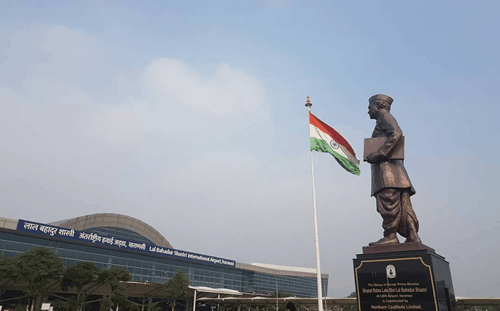
Ayodhya is one of Hinduism’s seven sacred cities — the birthplace of Lord Ram, the setting of Valmiki’s Ramayana, and a pilgrimage destination drawing tens of millions of devotees. On 22 January 2024, the Ram Mandir Pran Pratishtha ceremony consecrated the newly built Ram temple at Ram Janmabhoomi, marking one of independent India’s most significant spiritual and political moments. The airport that serves this sacred city was inaugurated just weeks earlier, on 30 December 2023, by PM Modi. Maharishi Valmiki International Airport Ayodhya Dham — named after the sage-poet who composed the Ramayana — carries IATA code AYJ and ICAO code VEAY. It handled 11,15,016 passengers in 2024–25, a staggering 423% growth. The terminal’s Nagara-style architecture with Ramayana murals reflects Ayodhya’s identity at every gate and walkway. IndiGo, Air India Express, and SpiceJet connect Ayodhya to seven major metros and state capitals.
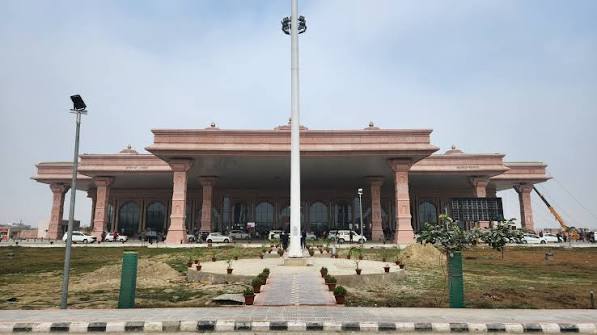
Quick Overview: Maharishi Valmiki International Airport Ayodhya Dham
| Detail | Information |
| Official Name | Maharishi Valmiki International Airport Ayodhya Dham |
| Also Known As | Ayodhya Airport; AYJ Airport |
| Location | NH-27 and NH-330, Naaka, Faizabad, Uttar Pradesh – 224133 |
| Serves | Ayodhya and Faizabad |
| Airport Type | Public — International (domestic operations; international status approved) |
| IATA Code | AYJ |
| ICAO Code | VEAY |
| Owner/Operator | Airports Authority of India (AAI) |
| Inaugurated | 30 December 2023 (PM Modi) |
| Commercial Operations | From 10 January 2024 |
| Terminal Area (Phase 1) | 6,250–6,500 sq. metres |
| Check-in Counters | 8–9 |
| Conveyor Belts | 3 (1 departure, 2 arrival) |
| Car Parking | 75 cars; 2 bus spots |
| Runway Designation | 11/29 |
| Runway Length | 2,250 m × 45 m (extension to 3,750 m planned) |
| ILS | Yes |
| Elevation | Approx. 110 m AMSL |
| Coordinates | Near NH-27/330 junction, Faizabad area |
| Distance from Ram Mandir | ~8–10 km |
| Distance from City Centre | ~15 km |
| Passengers (2024–25) | 11,15,016 (+423% YoY) |
| Aircraft Movements (2024–25) | 1,694 (+346% YoY) |
| Airlines | IndiGo, Air India Express, SpiceJet |
| Active Routes | Delhi, Mumbai, Bengaluru, Ahmedabad, Kolkata, Chennai, Dehradun |
| Architecture | Nagara-style; Ramayana murals throughout; GRIHA-5 rated |
Ayodhya Airport Location: Ram Janmabhoomi’s Air Gateway
Maharishi Valmiki International Airport is located adjacent to National Highways 27 and 330 at Naaka in Faizabad, approximately 15 km from Ayodhya’s city centre and 8 to 10 km from Ram Janmabhoomi temple. The registered address is Maharishi Valmiki International Airport Ayodhya Dham, NH-27 and NH-330, Faizabad, Uttar Pradesh 224133. The airport serves the twin-city catchment of Ayodhya and Faizabad — the latter being the railway junction town and the administrative base for the district.
Ayodhya’s sacredness in the Hindu tradition is absolute — seven-fold, it is one of the Sapta Moksha Puris (cities that grant liberation). Ram Janmabhoomi, Hanuman Garhi, Kanak Bhawan, Nageshwarnath Temple, and Dashrath Mahal are all within the city. The Ram Mandir’s January 2024 consecration triggered a pilgrimage surge that had been building for decades and is expected to sustain aviation demand at levels unprecedented for a Tier-2 UP city.
The four-lane connector road from the airport to the temple was built as part of the airport infrastructure project — significantly improving the 8 to 10 km airport-to-shrine journey.
Code, Terminal and Architecture
IATA AYJ and ICAO VEAY are the formal codes. The terminal’s architecture is its most celebrated feature — Nagara-style carved pillars, jaali screens, and an exterior design inspired by the Ram Mandir’s sandstone idiom. Ramayana murals line the walls of the departure hall, arrivals corridor, and waiting areas, making the terminal itself a cultural experience. The GRIHA-5 sustainability rating was achieved through a double-insulated roofing system, LED lighting, low heat gain double glazing, rainwater harvesting for groundwater replenishment, a solar plant, and canopies for energy conservation.
Phase 1 terminal capacity is 300 passengers per peak hour. Phase 2 — a 30,000 sq. metre terminal (expandable to 50,000 sq. metres) with 8 aerobridges and 5 to 7 million passenger per year capacity — is planned. Phase 3 will accommodate widebody aircraft when the runway is extended to 3,750 metres.
International status was approved, enabling customs and immigration infrastructure for direct international flights. No regular scheduled international flights operated as of mid-2026 — confirm current status.
Ayodhya Airport Connectivity: Seven Cities, Three Airlines
By Air: IndiGo is the primary carrier, connecting Ayodhya to Delhi, Mumbai, Bengaluru, Ahmedabad, Kolkata, and Chennai. Air India Express operates Delhi and other routes. SpiceJet serves selected destinations. The 423% passenger surge in 2024–25 to 11,15,016 reflects the Ram Mandir pilgrimage effect — a sustained, year-round pilgrimage economy rather than a seasonal peak.
By Road: The airport is on NH-27/330 — Lucknow is approximately 135 km west (2.5 to 3 hours). Varanasi is approximately 200 km east (3.5 to 4 hours). Prepaid taxis to Ayodhya city cost approximately ₹300 to ₹600. Ola and Uber operate from the airport.
By Rail: Ayodhya Junction Railway Station is approximately 15 km from the airport. The upcoming Ayodhya Dham Junction (new station) is closer — on the Delhi-Varanasi main line with trains to Delhi (~7 hours) and Varanasi (~3 hours).
Ayodhya Airport Amenities: Pilgrimage-Centred International Terminal
Check-in counters process all airlines efficiently. The departure lounge has PRM-compliant facilities, charging points, and comfortable seating reflecting the terminal’s spacious Phase 1 design. Food counters serve vegetarian options — appropriate for Ayodhya’s predominantly vegetarian pilgrim clientele. A lounge is available. ATMs are operational. Free Wi-Fi. Rainwater harvesting and solar systems reduce the environmental footprint. Arrive 2 hours before departure — pilgrimage peak periods see heavy check-in queues.
FAQs: Maharishi Valmiki International Airport
Q1. What is the IATA code for Ayodhya Airport?
AYJ is the IATA code and VEAY is the ICAO code. The official name is Maharishi Valmiki International Airport Ayodhya Dham, on NH-27/330 at Naaka, Faizabad.
Q2. When was Ayodhya Airport inaugurated?
PM Modi inaugurated the airport on 30 December 2023, three weeks before the Ram Mandir Pran Pratishtha ceremony on 22 January 2024. Commercial flights began on 10 January 2024.
Q3. Why is the airport named after Maharishi Valmiki?
Valmiki is the sage-poet who composed the Ramayana — the epic that narrates Lord Ram’s life and whose setting is centred in Ayodhya. The name honours the author of India’s most influential sacred narrative.
Q4. How far is Ayodhya Airport from Ram Mandir?
Approximately 8 to 10 km — about 15 to 25 minutes by taxi on the four-lane airport connector road.
Q5. What is the passenger capacity of Ayodhya Airport’s Phase 1 terminal?
300 passengers per peak hour. Phase 2 will have 30,000 sq. metres of terminal space (expandable to 50,000 sq. metres) with 5 to 7 million annual capacity. Phase 3 will accommodate widebody aircraft after runway extension to 3,750 metres.