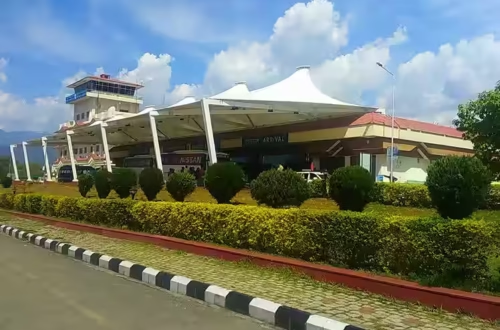
Lower Assam’s western edge has historically been a place the Indian aviation map skipped. Dhubri district sits where the Brahmaputra widens into its broadest course before crossing into Bangladesh, bordering Bhutan to the north and Meghalaya to the south. For decades, the nearest functioning airport was hours away in Guwahati. That changed on 8 May 2021, when flybig launched operations from Rupsi Airport under the UDAN scheme — reviving an airfield that had been dormant for years and giving lower Assam its first meaningful air connectivity in a generation. The airport also carries a name-change proposal: in July 2024, the Assam government approved renaming it Gurudev Kalicharan Brahma Airport in honour of the Bodo cultural figure, though the renaming remained unimplemented as of mid-2026.
Quick Overview: Rupsi Airport, Dhubri
| Detail | Information |
| Airport Name | Rupsi Airport |
| Proposed Rename | Gurudev Kalicharan Brahma Airport (approved 2024; pending implementation) |
| Location | Rupsi, Kokrajhar District, Assam |
| Serves | Dhubri and Kokrajhar |
| Airport Type | Public — Domestic |
| IATA Code | RUP |
| ICAO Code | VERU |
| Owner | Government of India |
| Operator | Airports Authority of India (AAI) |
| Total Land Area | 447 acres |
| Runway Designation | 05/23 |
| Runway Length | 1,771–1,829 metres |
| Elevation | 40 m / 131 ft AMSL |
| Distance from Dhubri | ~17–23 km north of Dhubri city |
| Distance from Rupsi Town | ~8 km |
| Commercial Revival | 8 May 2021 |
| Passengers (2024–25) | 7,122 |
Rupsi Airport Location: Between Dhubri and Kokrajhar on the Brahmaputra Plain
Rupsi Airport is located in Rupsi village, Kokrajhar district, approximately 17 to 23 kilometres north of Dhubri city and about 8 kilometres from Rupsi town itself. The airport sits on the flat alluvial plains of the Brahmaputra river system, at an elevation of only 40 metres above mean sea level — one of the lowest-lying airports in India’s northeast, consistent with the terrain of this floodplain geography.
The airport’s dual-city designation — serving both Dhubri and Kokrajhar — reflects its geographic midpoint between the two towns. Kokrajhar is the headquarters of the Bodoland Territorial Council, and Dhubri is the district headquarters of one of Assam’s most densely populated lower-riparian districts. The surrounding region also borders Bhutan to the north and has proximity to western Meghalaya and northern West Bengal, giving the airport a catchment that extends beyond just Assam. The Dhubri–Phulbari Bridge over the Brahmaputra, currently under construction, will further improve road access to the airport precinct once complete.
Rupsi Airport Code: IATA RUP and ICAO VERU
The airport’s IATA code is RUP and its ICAO code is VERU. RUP is the identifier used across airline booking platforms and aviation databases for flights to and from Rupsi. The ICAO code VERU places it within the VE block for eastern India and the northeast. Given the airport’s thin commercial schedule, RUP does not appear frequently on mainstream booking aggregators — checking directly with operating airlines or AAI for current active routes is the most reliable approach.
Rupsi Airport Terminal: WWII Heritage Site Revived for Modern Connectivity
The story of Rupsi Airport begins during World War II. The airstrip was established by the British and used extensively by American forces as part of the China-Burma-India theatre of operations — a strategic supply and logistics node in the Allied effort against Japanese forces in the region. After Indian independence, the airport transitioned to limited civilian use before falling dormant for decades.
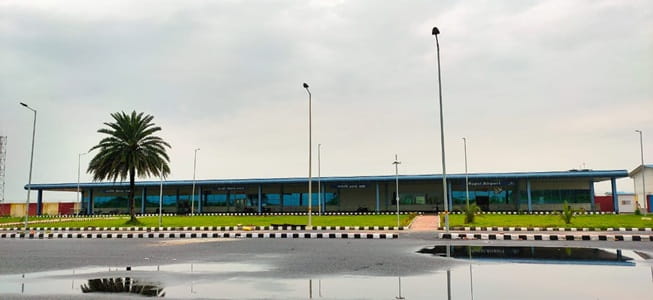
The revival under the UDAN scheme brought the airport back into service in May 2021. The current terminal is a single domestic building with a very limited peak-hour capacity — figures from different sources range from 20 to a small number of simultaneous passengers, consistent with an airport handling under 10,000 passengers per year. The terminal provides the essentials: check-in processing, security screening, and a basic waiting area.
The runway, designated 05/23, measures approximately 1,771 to 1,829 metres in length and 46 metres in width — capable of handling ATR-72 aircraft, which is the aircraft type suited to UDAN-scheme routes of this kind. An air traffic control system is in place for safe landing and take-off management. The total land footprint of 447 acres gives the airport room for future expansion if traffic growth justifies it.
Rupsi Airport Connectivity: Guwahati and Kolkata Routes Under UDAN
By Air: Flybig launched the first post-revival services connecting Rupsi to Guwahati and Kolkata from 8 May 2021. Since then, route availability has fluctuated — the airport handled approximately 33,000 passengers at its peak in 2022–23 before traffic declined to 7,122 in 2024–25, reflecting service pattern changes and broader regional demand dynamics. Current active routes connect Rupsi to Guwahati, the northeast’s primary aviation hub. Kolkata connectivity has also been part of the service history. Both routes should be verified on current airline platforms before booking, as UDAN routes on thin-traffic airports are among the most variable in India’s network.
By Road: Taxis, local transport buses, and private or rented cars connect the airport to Dhubri, Kokrajhar, and surrounding towns. Travel time to Dhubri city centre is approximately 30 to 40 minutes depending on route and conditions. Road connectivity in this part of lower Assam is functional though not fast.
By Rail: Dhubri has a railway station connected to the Assam rail network, though broad-gauge connectivity in lower Assam west of Guwahati has historically been less developed than the upper Assam corridor. Kokrajhar is better served by rail, sitting on the main Northeast Frontier Railway line.
Nearest Major Airport: Lokpriya Gopinath Bordoloi International Airport in Guwahati is the nearest major aviation hub, handling international and major domestic routes for the broader northeast.
Rupsi Airport Amenities: Bare Essentials at a Revived UDAN Airport
Amenities at Rupsi Airport reflect the operational scale of a freshly revived regional facility handling under 10,000 passengers annually. A help desk is available. Basic security services are in operation. The terminal’s limited size means there are no lounges, no restaurants, and no retail shops in any commercial sense. Trolleys and wheelchair assistance are noted in some AAI listings, though the scale of the terminal makes these less critical than at busier airports.
An air traffic control system ensures safe operations. Ground transport from the airport is arranged through local taxis — no pre-paid taxi counter or app-based service operates at Rupsi. Travellers should arrange pickups in advance given the rural location and limited transport options at the airstrip exit.
The airport’s revival is significant for the region it serves even at current traffic levels — for residents of Dhubri, Kokrajhar, and surrounding lower Assam towns, the alternative to a short regional flight is a multi-hour road or rail journey to Guwahati, and the time savings are substantial.
FAQs: Rupsi Airport
Q1. What is the IATA code for Rupsi Airport?
The IATA code is RUP and the ICAO code is VERU. The airport is located in Rupsi, Kokrajhar district, Assam, and serves both Dhubri and Kokrajhar.
Q2. When did commercial flights restart at Rupsi Airport?
Commercial operations resumed on 8 May 2021 under the UDAN regional connectivity scheme, after the airport had been dormant for many years.
Q3. Which airlines and routes currently operate from Rupsi?
Services have connected Rupsi to Guwahati and Kolkata, primarily through flybig. Current schedules should be verified directly with operating airlines before travel, as routes under the UDAN scheme can change.
Q4. Is there a proposed name change for Rupsi Airport?
Yes. The Assam government approved renaming it Gurudev Kalicharan Brahma Airport in July 2024. As of mid-2026, the renaming had not been implemented and the airport continues to be listed as Rupsi Airport.
Q5. What is the historical significance of Rupsi Airport?
The airstrip was originally built during World War II by the British and used by American forces as part of the China-Burma-India theatre of operations — making it one of several northeast Indian airports with direct wartime heritage.