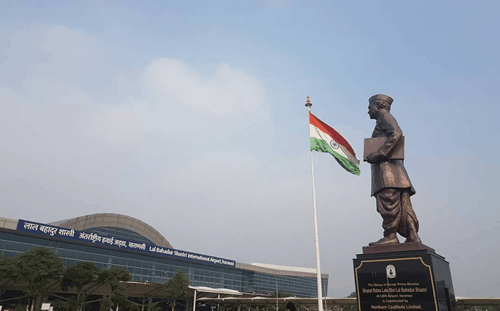
Lucknow is a city of elaborate formality — the tehzeeb (refinement) of Nawabi culture, the politeness of the Awadhi adab, the layered architecture of the Residency and Bara Imambara and Hazratganj’s colonial arcade, and a biryani tradition that insists on dum cooking and gentle spice. It is also the capital of India’s most populous state, a rapidly growing technology and defence manufacturing hub, and the political centre where UP’s governance intersects with national power. Chaudhary Charan Singh International Airport at Amausi — named after India’s fifth Prime Minister and farmers’ leader — carries IATA code LKO and ICAO code VILK, handled 64,38,506 passengers in 2024–25, ranks as India’s 11th-busiest airport, and is operated by Lucknow International Airport Limited (LIAL) under the Adani Group. Three terminals, a new T3 inaugurated March 2024, Metro connectivity via the Green Line, and a ₹10,000 crore expansion targeting 14 million annual capacity by 2026–27 define its current trajectory.
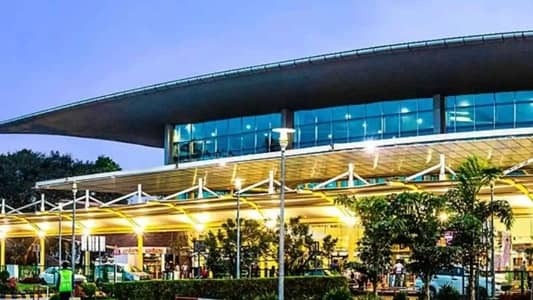
Quick Overview: Chaudhary Charan Singh International Airport
| Detail | Information |
| Official Name | Chaudhary Charan Singh International Airport (CCSIA) |
| Also Known As | Lucknow Airport; Amausi Airport; LKO Airport |
| Location | Amausi, Lucknow, Uttar Pradesh, India |
| Airport Type | Public — International |
| IATA Code | LKO |
| ICAO Code | VILK |
| Owner | Airports Authority of India (AAI) |
| Operator | Lucknow International Airport Limited (LIAL) — Adani Group |
| Adani Concession | Since October 2021 |
| Focus City for | IndiGo |
| Named After | Chaudhary Charan Singh (5th PM of India; farmers’ leader) |
| Opened | 1986 |
| Terminals | T1 (Domestic), T2 (Domestic), T3 (International + Domestic; inaugurated March 2024) |
| T3 Capacity | 3.2 million domestic + 800,000 international pax/year |
| Runway | 14/32; 2,744 m (extension to 3,514 m planned) |
| Metro | Lucknow Metro Green Line — Amausi Station |
| Elevation | 123 m / 404 ft AMSL |
| Coordinates | 26°45′38″N, 80°53′25″E |
| Distance from City Centre | ~14–15 km southwest |
| Passengers (2024–25) | 64,38,506 (+4.1% YoY) |
| Aircraft Movements (2024–25) | 49,662 (+9% YoY) |
| Cargo Tonnage (2024–25) | 22,102 tonnes (+5.3% YoY) |
| Expansion | ₹10,000 crore; capacity to 14 million by 2026–27; runway to 3,514 m; 24 flights/hour (from 17) |
| Airlines | IndiGo, Air India, Air India Express, SpiceJet, Akasa Air |
| International Routes | Dubai, Sharjah, Muscat, Jeddah, Riyadh, Kuala Lumpur |
Lucknow Airport Location: Amausi, Gateway to the Nawabi City
Chaudhary Charan Singh International Airport is located in Amausi, approximately 14 to 15 km southwest of Lucknow’s city centre (Hazratganj area). The coordinates are 26°45′38″N, 80°53′25″E, at an elevation of 123 metres above sea level — the flat Gangetic plain of UP’s state capital zone.
Lucknow’s heritage landmarks — the Bara Imambara (1784, its Bhool Bhulaiya labyrinth), Chhota Imambara, Hussainabad Clock Tower, and the Lucknow Residency (1857 Siege site) — are approximately 15 to 18 km northeast of the airport. Gomti Nagar’s IT and corporate corridor is approximately 10 km north. The Adani-operated airport’s location on the southwest fringe serves the southern and western residential zones (Alambagh, Mahanagar) most conveniently.
The Metro Green Line’s Amausi Station is adjacent to the airport — connecting to Charbagh Railway Station (~4 km) and the central city in approximately 20 to 25 minutes. This makes Lucknow Airport one of UP’s best-connected airports for public transport access.
Code, Terminal and T3 Expansion
IATA LKO and ICAO VILK are the formal codes. The airport operates three terminals:
Terminal 1 and Terminal 2 (Domestic): The two older domestic terminals have handled Lucknow’s domestic traffic through the growth years. IndiGo’s hub operations dominate T1/T2 with frequent departures to Delhi, Mumbai, Bengaluru, Hyderabad, Chennai, Kolkata, Ahmedabad, Jaipur, and other cities.
Terminal 3 (Domestic + International, inaugurated March 2024): T3 is the flagship expansion — handling 3.2 million domestic and 800,000 international passengers per year simultaneously. Built on 90.126 acres north of the runway with Egis as design consultant, T3 brings modern check-in rows, aerobridges, FIDS, inline baggage systems, lounges, and expanded commercial retail to Lucknow’s airport experience.
₹10,000 Crore Expansion (ongoing): Adani Airports announced ₹10,000 crore in total investment for CCSIA. Key elements include a new Terminal 4, runway extension from 2,744 metres to 3,514 metres (enabling Airbus A380 and Boeing 777 wide-body operations directly from Lucknow), a parallel taxiway increasing flight handling from 17 to 24 movements per hour, and total capacity raising from 8 million to 14 million passengers by 2026–27.
Lucknow Airport Connectivity: UP’s International Hub
By Air (Domestic): IndiGo (focus city) dominates with the highest frequency across Delhi, Mumbai, Bengaluru, Hyderabad, Chennai, Kolkata, Ahmedabad, Jaipur, Varanasi, Gorakhpur, Ayodhya, and other UP destinations. Air India, SpiceJet, Akasa Air, and Air India Express also serve domestic routes. Aircraft movements of 49,662 in 2024–25 — approximately 136 daily — make Lucknow one of UP’s most active aviation hubs.
By Air (International): Dubai (IndiGo, Air India), Sharjah (Air Arabia), Muscat, Jeddah, Riyadh, and Kuala Lumpur are the active international routes. The Gulf connectivity serves Lucknow’s and UP’s large NRI diaspora in the UAE, Saudi Arabia, and Oman. Runway extension to 3,514 metres will eventually enable direct long-haul flights to London and North America — under the ₹10,000 crore expansion.
By Metro: Lucknow Metro Green Line (Amausi Station) connects directly to the airport, reaching Charbagh Railway Station in approximately 10 minutes and Hazratganj in approximately 20 minutes. Affordable at ₹20 to ₹60.
By Road: Ola, Uber, and pre-paid taxis serve the airport. City centre is 14 to 15 km (30 to 50 minutes). Kanpur is 80 km west (1.5 hours). Ayodhya is 135 km east (2.5 hours). Varanasi is approximately 280 km southeast (4.5 hours).
Lucknow Airport Amenities: International Hub Standard
T3’s amenities significantly upgrade what was available in T1/T2. Multiple restaurants serve Awadhi cuisine — biryani, kebabs, sheermal — alongside standard café formats. Duty-free shopping for international departures covers perfumes, electronics, and Indian products. AGL Lounge (domestic) and an international terminal lounge serve priority and eligible credit card passengers. Free OTP-based Wi-Fi (30 to 45 minute sessions) is available. ATMs and currency exchange serve international travellers. DigiYatra is operational. Wheelchair assistance and free trolleys are provided. The airport operates 24/7.
FAQs: Chaudhary Charan Singh International Airport
Q1. What is the IATA code for Lucknow Airport?
LKO is the IATA code and VILK is the ICAO code. The official name is Chaudhary Charan Singh International Airport, located in Amausi, approximately 14 to 15 km southwest of Lucknow city centre.
Q2. Who was Chaudhary Charan Singh?
Chaudhary Charan Singh (1902–1987) was India’s fifth Prime Minister (1979–80) and one of independent India’s most prominent advocates for farmers’ rights. He served as UP Chief Minister twice and founded the Lok Dal party. The airport bears his name in recognition of his contribution to UP and national politics.
Q3. How many terminals does Lucknow Airport have?
Three — T1 (domestic), T2 (domestic), and T3 (domestic + international, inaugurated March 2024). T3 adds 3.2 million domestic and 800,000 international annual capacity. A T4 is planned under the ₹10,000 crore expansion.
Q4. What is the ₹10,000 crore expansion at Lucknow Airport?
Adani Airports’ investment plan includes a new terminal, runway extension from 2,744 m to 3,514 m (wide-body capable), parallel taxiway boosting hourly flights from 17 to 24, and total capacity increase from 8 million to 14 million passengers by 2026–27.
Q5. Is there Metro connectivity to Lucknow Airport?
Yes. Lucknow Metro Green Line has an Amausi Station adjacent to the airport. The Metro connects to Charbagh Railway Station (~10 minutes) and Hazratganj (~20 minutes), making it one of UP’s best-connected airports for public transport.