For 67 years, HAL Airport was Bengaluru’s window to the world. From January 1941 — when the British Royal Indian Air Force opened the airfield for Hindustan Aeronautics Limited’s aircraft testing operations — through India’s independence, through the IT boom that transformed Bangalore into a global technology destination, through the Singapore route launched by Air India in January 1995 and the explosive passenger growth of the early 2000s, HAL Airport was where Bengaluru’s residents caught their flights. Then on 24 May 2008, Kempegowda International Airport at Devanahalli opened and HAL Airport’s commercial passenger services ceased the same day. Since then, HAL Airport has operated as a military, VVIP, and general aviation facility — no scheduled commercial flights, no IATA code, ICAO code VOBG — while Bengaluru’s population doubled and KIA’s capacity strained under one of the world’s fastest-growing aviation markets. By mid-2026, a detailed revival plan was in motion: AAI, the Ministry of Civil Aviation, HAL, and BIAL were in advanced discussions to reopen HAL Airport for commercial flights, with a 2033 deadline tied to BIAL’s exclusivity agreement, and plans for a new terminal to begin construction in 2030.
Quick Overview: HAL Airport
| Detail | Information |
| Official Name | HAL Airport (Hindustan Aeronautics Limited Airport) |
| Also Known As | HAL Bengaluru International Airport; Hindustan Airport |
| Location | HAL Old Airport Road, Bengaluru, Karnataka, India |
| Airport Type | Military / VVIP / General Aviation (formerly public commercial) |
| IATA Code | None (no commercial passenger service) |
| ICAO Code | VOBG |
| Owner/Operator | Hindustan Aeronautics Limited (HAL) |
| AAI Terminal Ownership | AAI owns the terminal building; HAL owns the surrounding land |
| Opened | January 1941 |
| Commercial Passenger Services Ceased | 24 May 2008 |
| Runway Designation | 09/27 |
| Runway Length | 3,306 m |
| Elevation | 888 m / 2,912 ft AMSL |
| Coordinates | 12°57′00″N, 77°40′06″E |
| Distance from City Centre | ~12 km east (from MG Road) |
| Passengers (2025–26) | 19,941 (VVIP/non-commercial; +15.5% YoY) |
| Aircraft Movements (2025–26) | 5,299 (+25.2% YoY) |
| Current Use | Military testing; VVIP aviation; private charters; general aviation |
| Commercial Revival Target | Before May 2033 (when BIAL exclusivity agreement expires) |
| New Terminal Plan | Demolish existing terminal 2030; new terminal operational before 2033 |
HAL Airport Location: The Heart of Bengaluru’s Eastern Aviation History
HAL Airport is located on HAL Old Airport Road in the eastern zone of Bengaluru, approximately 12 kilometres east of MG Road (central Bengaluru) and 5 to 6 kilometres from Indiranagar. The coordinates are 12°57′00″N, 77°40′06″E, at an elevation of 888 metres above mean sea level — consistent with Bengaluru’s plateau position.
The airport’s centrality is the most politically and commercially significant fact about it in 2026. Kempegowda International Airport at Devanahalli is approximately 40 to 45 kilometres from the city centre — a journey that takes 1.5 to 2.5 hours in Bengaluru’s traffic. HAL Airport, by contrast, is 12 kilometres from the commercial heart of the city. For Bengaluru’s IT sector workers, entrepreneurs, and business travellers who live in the eastern and central zones, the revival of HAL as a commercial airport would eliminate the single biggest inconvenience of flying out of Bengaluru.
The surrounding neighbourhood has grown dramatically since 2008. HAL Old Airport Road itself is now a commercial and restaurant corridor. Indiranagar, Domlur, Koramangala, and the HAL Second Stage Layout are established residential and commercial zones surrounding the airfield. The airport’s green open space within this dense urban matrix has itself become an issue — surrounded by development that constrains any further expansion of the 3,306-metre runway.
HAL Airport Code: ICAO VOBG — No IATA Code
HAL Airport carries the ICAO code VOBG. No IATA code is currently assigned — IATA codes require active scheduled commercial passenger operations, which ceased in 2008. VOBG places the airport in the VO southern India block. The airport publishes METAR weather data, confirming its active operational status as an airfield. When commercial operations resume, an IATA code will be assigned.
HAL Airport Terminal: A Legacy Building Awaiting Demolition and Replacement
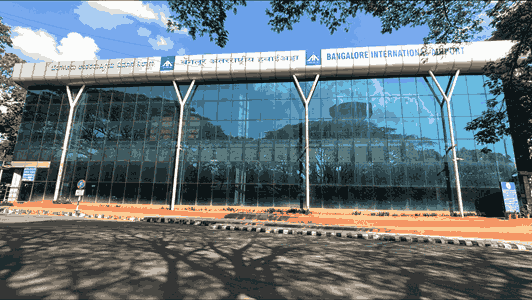
The terminal building at HAL Airport belongs to AAI — while the surrounding defence land belongs to HAL. This split ownership has been a key consideration in the revival negotiations. The existing terminal, which served millions of passengers from 1941 to 2008, is currently used for VVIP arrivals and departures, private charter processing, and related non-commercial functions.
AAI’s 10-year master plan proposes demolishing the existing terminal in 2030 and constructing a new, expanded facility in phases, targeting completion before May 2033. The first expansion phase will add capacity for a specific passenger volume (details to be confirmed in final design). The plan also includes a seven-storey parking structure and a commercial complex alongside the terminal.
The 3,306-metre runway is the airport’s most significant physical asset. At this length, it can theoretically accommodate wide-body aircraft including Boeing 777 class (though apron, taxiway, and gate infrastructure would need substantial upgrading for such operations). For comparison, the runway is actually longer than the 3,000-metre threshold that would allow A380 landings, though the apron and taxiway limitations at HAL make wide-body operations complex.
The BIAL exclusivity agreement — signed when Kempegowda International Airport opened in 2008 — bars any airport from operating within a 150-kilometre radius of KIA until May 2033. HAL Airport sits well within that radius. Revival before 2033 requires BIAL to issue a No-Objection Certificate, which the Karnataka government has formally requested, offering to indemnify BIAL against any commercial losses. As of September 2025, AAI, the Ministry of Civil Aviation, HAL, and BIAL were in advanced discussions. Bengaluru South MP Tejasvi Surya confirmed Civil Aviation Minister Ram Mohan Naidu was “extremely enthusiastic” about the revival. The Civil Aviation Secretary requested further consultations to resolve the AAI–BIAL operational rights question: AAI wants to run the revived airport itself, while BIAL has cited the no-compete clause in its concession arrangement.
In the event of a phased reopening before 2033 — which multiple aviation analysts and political figures have advocated — HAL Airport could resume domestic commercial operations from an upgraded version of the existing terminal before the new building is ready.
HAL Airport Connectivity: VVIP, Military and Charter Only; Commercial Revival Expected Before 2033
By Air (Current): No scheduled commercial passenger flights operate from HAL Airport as of mid-2026. The airport operates 24/7 for military aircraft testing by HAL and the Indian Armed Forces, VVIP flights (government and head-of-state movements), and private charter and general aviation. The 19,941 passengers in 2025–26 and 5,299 aircraft movements reflect these non-commercial operations — notably growing at 15.5% and 25.2% year-on-year respectively.
By Air (Future): Commercial revival is planned before May 2033. AAI’s master plan targets construction of a new terminal from 2030. A phased approach allowing limited commercial operations from the existing terminal before 2030 has been discussed. The Bengaluru IT community and political stakeholders have been among the strongest advocates for expedited revival.
By Road: HAL Airport is approximately 12 km from central Bengaluru (MG Road), well-served by HAL Old Airport Road. This road and surrounding infrastructure handle significant daily traffic. When commercial operations resume, Ola/Uber access from Bengaluru’s eastern suburbs will be dramatically faster than to KIA. The proposed Namma Metro Purple Line extension toward the HAL area will also improve public transport access.
Nearest Commercial Airport: Kempegowda International Airport (BLR, IATA) at approximately 40 to 45 km north is the sole current commercial option for Bengaluru travellers.
HAL Airport Amenities: Military and VVIP Infrastructure; Passenger Facilities Non-Public
The existing terminal at HAL Airport provides VVIP and government flight handling facilities — well-appointed waiting areas, security processing for state guests, and the administrative infrastructure of an active state aviation facility. These are not accessible for general public passengers.
When commercial operations resume and the new terminal is built (targeted pre-2033), Bengaluru can expect a modern facility positioned as a relief valve for the congested KIA — bringing flights closer to the city for eastern and central Bengaluru residents. Aviation analysts project that even a modest domestic commercial operation at HAL — handling 3 to 5 million passengers annually in the initial phase — would meaningfully reduce peak-hour pressure at KIA, which handled over 4.4 crore passengers in 2025–26.
FAQs: HAL Airport
Q1. Does HAL Airport have an IATA code?
No. HAL Airport carries only the ICAO code VOBG. No IATA code is assigned as the airport has no scheduled commercial passenger service. A code will be assigned when commercial operations resume.
Q2. When did HAL Airport stop commercial flights?
Commercial passenger services ceased on 24 May 2008, the day Kempegowda International Airport at Devanahalli opened. HAL Airport has since operated for military, VVIP, and private charter purposes.
Q3. When will HAL Airport reopen for commercial flights?
The target is before May 2033, when BIAL’s exclusivity agreement (which bars any airport within 150 km of KIA) expires. AAI plans to demolish the existing terminal in 2030 and build a new one. A phased reopening with limited commercial flights before 2033 is possible if BIAL issues an NOC, which the Karnataka government has formally requested.
Q4. Who owns HAL Airport?
HAL (Hindustan Aeronautics Limited) owns the land and airfield. AAI owns the terminal building. This split ownership is a key factor in the revival negotiations regarding operational rights and airport management.
Q5. Why is HAL Airport’s revival significant for Bengaluru?
KIA at Devanahalli is 40 to 45 km from the city centre — 1.5 to 2.5 hours in typical Bengaluru traffic. HAL Airport is 12 km from the city centre. Commercial revival would dramatically reduce travel time to the airport for eastern and central Bengaluru residents and provide capacity relief for an increasingly congested KIA.