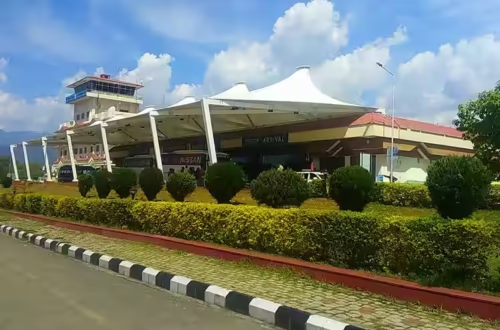
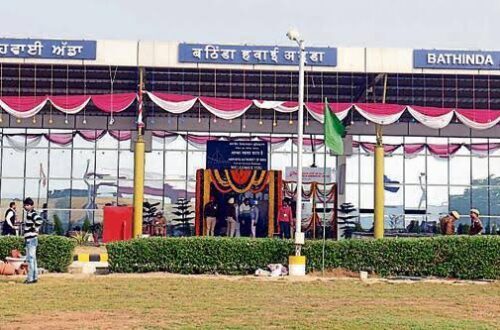
Hubballi — still commonly called Hubli — is Karnataka’s second-largest city by urban agglomeration when measured together with Dharwad, its twin city 20 kilometres to the east. It is north Karnataka’s commercial engine: a hub for the cotton and groundnut trade, home to the Karnataka Institute of Medical Sciences, Visvesvaraya Technological University’s administrative seat, and one of India’s most active rail workshops at Hubballi Railway Workshop. Hubli Airport, operating since 1974 and carrying IATA code HBX and ICAO code VOHB, handled 3.46 lakh passengers in 2024–25 and is Karnataka’s third-busiest domestic airport after BLR and Belagavi. A new ₹275 crore terminal covering 20,000 square metres — with a 5-star green building certification, three aerobridges, and 2,400 peak-hour passenger capacity — was under construction after PM Modi laid the foundation stone in March 2024, targeted for completion by end of 2026. The airport is already self-sufficient in electricity through an 8-megawatt ground-mounted solar plant commissioned in April 2021.
Quick Overview: Hubli Airport
| Detail | Information |
| Official Name | Hubli Airport / Hubballi Airport |
| Location | Gandhi Nagar, Hubballi, Karnataka, India |
| Serves | Hubballi and Dharwad |
| Airport Type | Public — Domestic |
| IATA Code | HBX |
| ICAO Code | VOHB |
| Operator | Airports Authority of India (AAI) |
| Opened | 1974 |
| Current Terminal (T1) | Inaugurated December 2017 (3,600 sq. metres; 300 passengers capacity) |
| New Terminal (T2) | ₹273–275 crore; 20,000 sq. metres; 2,400 peak-hour pax; 3 aerobridges; 5-star green; target end 2026 |
| Solar Plant | 8 MW ground-mounted, commissioned April 2021 |
| Runway Designation | 08/26 |
| Runway Length | 2,600 m × 45 m (extended to 8,500 ft / approx. 2,591 m) |
| Total Airfield Area | 369 acres (post-apron expansion) |
| Elevation | 662 m / 2,171 ft AMSL |
| Coordinates | 15°21′42″N, 75°05′05″E |
| Distance from Hubballi | ~8 km |
| Distance from Dharwad | ~20 km |
| Passengers (2024–25) | 3,46,405 (+3.5% YoY) |
| Aircraft Movements (2024–25) | 4,334 (+18.1% YoY) |
| Cargo Tonnage (2024–25) | 284 tonnes (+78.2% YoY) |
| Current Airline | IndiGo (dominant) |
| Active Routes | Bengaluru, Delhi, Hyderabad, Mumbai, Pune |
Hubli Airport Location: Gandhi Nagar Between Twin Cities
Hubli Airport is located in Gandhi Nagar, approximately 8 kilometres from Hubballi city centre and 20 kilometres from Dharwad. The coordinates are 15°21′42″N, 75°05′05″E, at an elevation of 662 metres above mean sea level. The airport sits on the edge of the Hubballi–Dharwad twin-city urban agglomeration, one of Karnataka’s most significant secondary urban systems.
The twin cities’ combined economic identity draws from trade, manufacturing, medical services, engineering education, and transport — Hubballi is a major railway junction on the Southern Railway zone’s Hubli Division. The university ecosystem (VTU, KIMS, Karnataka University in Dharwad, and engineering colleges across both cities) generates significant student and family travel demand, particularly on the Bengaluru and Pune routes.
North Karnataka’s geography is drier and less developed than southern Karnataka, and Hubli Airport functions as the de-facto air gateway to a large swathe of the region: Dharwad, Gadag, Haveri, Uttara Kannada, and even parts of Goa’s hinterland via road connection. The airport’s expansion — particularly the new terminal’s 2,400 peak-hour capacity and the apron reconfiguration to allow 10 larger aircraft — reflects AAI’s recognition of this catchment’s untapped potential.
Hubli Airport Code: IATA HBX and ICAO VOHB
The airport’s IATA code is HBX and its ICAO code is VOHB. HBX appears in airline booking systems for both Hubballi and Dharwad — the airport serves both cities. VOHB places it in the VO southern India block. The 2,600-metre runway is capable of handling Airbus A320 and Boeing 737 class narrow-body jets — a technical foundation that supports the aspirations for expanded airline services and eventual international connections to Gulf destinations.
Hubli Airport Terminal: December 2017 Building With Major T2 Under Construction
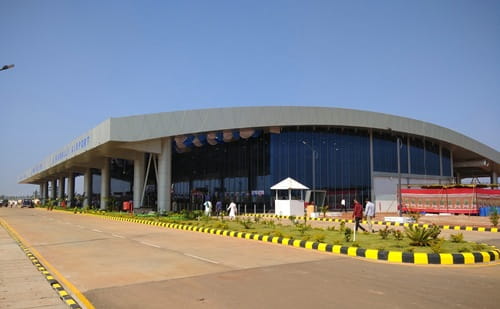
Current Terminal (T1): The existing terminal was inaugurated in December 2017 as part of a broader airport upgrade project costing ₹142 crore. It covers 3,600 square metres and has a capacity of approximately 300 passengers simultaneously. The terminal handles IndiGo’s multiple daily routes, check-in counters, security screening, a departure lounge, and arrivals baggage claim. This was a significant upgrade from the earlier terminal that pre-dated the 2017 renovation.
The airport’s history before 2017 included periodic service interruptions when runway extension work required closure. An earlier expansion in 2004 extended the runway from 4,500 feet to 7,500 feet and increased width from 90 feet to 135 feet — the work that opened Hubli to jet-class operations for the first time. Subsequent apron expansion to 369 total acres brought the runway to its current 8,500 feet (approximately 2,591 metres) at 45 metres width. A new ATC tower was added.
New Terminal (T2): PM Modi laid the foundation stone of the new terminal in March 2024, with construction beginning simultaneously. The new terminal covers 20,000 square metres — more than five times T1’s footprint — and is designed to handle 2,400 peak-hour passengers (1,400 in peak hour per total load). Features include three aerobridges (dramatically improving boarding comfort), a 5-star green building certification with waste management, rainwater harvesting, and solar energy systems integrated into the design. The expanded apron will park 10 larger aircraft (A320 class) and 4 smaller aircraft simultaneously, transforming the airport’s handling capacity. Target completion is end of 2026.
The cargo tonnage jump of 78.2% in 2024–25 to 284 tonnes signals growing industrial and agricultural export demand — north Karnataka’s groundnut, cotton, and processed food sectors represent natural cargo catchment.
Hubli Airport Connectivity: IndiGo to Five Cities
By Air: IndiGo is the dominant and primary carrier at Hubli Airport, operating the majority of daily departures. Routes connect Hubballi to Bengaluru (multiple times daily), Delhi (daily), Hyderabad (daily), Mumbai (daily), and Pune (regular service). The combined domestic network covers north Karnataka’s five most commercially important city connections. Cargo tonnage growth at 78.2% suggests cargo airlines or additional commercial freight services may follow the terminal expansion.
By Road: Hubballi is connected to Dharwad (20 km), Bengaluru (approximately 400 km, 6 to 7 hours via NH-48/NH-67), Pune (approximately 500 km, 8 to 9 hours), Goa (approximately 200 km, 3.5 to 4 hours), and Mumbai (approximately 600 km). KSRTC and private buses cover these routes extensively. Local buses and taxis connect the airport to Hubballi city (8 km, approximately 20 minutes) and Dharwad (20 km, approximately 40 minutes). A hotel, Fortune Park Airport Road Hubballi, is located directly opposite the airport.
By Rail: Hubballi Railway Junction is one of Karnataka’s most significant rail nodes — the headquarters of Hubli Division of South Western Railway — with direct trains to Bengaluru, Mumbai, Goa (via Londa), Hyderabad, and many cities across India. The station is approximately 8 km from the airport. Rail is strong competition to aviation for the Bengaluru route given frequency and cost, making the Hubli–Mumbai and Hubli–Delhi air routes particularly important for longer-distance demand.
Hubli Airport Amenities: Solar-Powered Regional Airport With Major Upgrade Coming
The existing T1 terminal provides functional domestic airport amenities: check-in counters for IndiGo operations, security screening, an air-conditioned departure lounge, restrooms, and basic food and beverage. ATMs are available. The airport is entirely solar-powered through its 8 MW plant commissioned in April 2021 — the first Karnataka airport (outside BLR) to achieve this milestone and a practical operating cost advantage for AAI.
T2, when operational by end of 2026, will transform the Hubli Airport experience with three aerobridges for boarding, expanded food and beverage court, retail shops, larger lounges, multiple check-in counters, and 5-star green building amenities including better lighting, acoustics, and air quality management.
The Fortune Park Airport Road hotel directly opposite the airport is a notable amenity for the airport catchment — convenient accommodation for passengers arriving late or departing early, and for airline crews.
FAQs: Hubli Airport
Q1. What is the IATA code for Hubli Airport?
The IATA code is HBX and the ICAO code is VOHB. The airport is located in Gandhi Nagar, approximately 8 km from Hubballi and 20 km from Dharwad, Karnataka.
Q2. Which airlines and routes operate from Hubli Airport?
IndiGo operates the majority of scheduled services from HBX, connecting Hubballi to Bengaluru, Delhi, Hyderabad, Mumbai, and Pune. Confirm current schedules before booking as frequencies change seasonally.
Q3. What is the new terminal being built at Hubli Airport?
A new 20,000 sq. metre Terminal 2 with three aerobridges, 2,400 peak-hour passenger capacity, and 5-star green building certification was commenced after PM Modi’s foundation stone in March 2024. Estimated cost ₹273 to 275 crore. Target completion end of 2026.
Q4. Is Hubli Airport solar-powered?
Yes. An 8 MW ground-mounted grid-connected photovoltaic solar plant was commissioned in April 2021, making Hubli Airport self-sufficient in electricity generation and one of India’s greenest regional airports.
Q5. Does Hubli Airport have potential for international flights?
The 2,600-metre runway is already capable of handling international narrow-body jet operations. Airport Director Pramod Kumar Thakre and local aviation advisory committee members have noted this capacity and called for Gulf connectivity — particularly Hubballi’s diaspora links to Dubai and Sharjah. The new T2 completion will strengthen the case for international route awards.