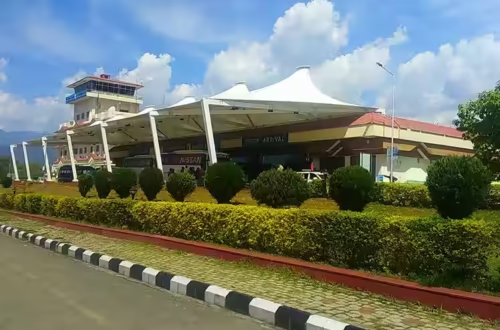
Mangaluru sits at the confluence of two powerful geographies: the Western Ghats above and the Arabian Sea at its doorstep. It is Karnataka’s principal port city, home to Mangalore Port (now New Mangalore Port Authority), one of India’s top-ten cargo ports. More importantly for its airport, Mangaluru is the origin of one of India’s most economically productive diaspora streams — the Tulu-speaking community of Dakshina Kannada and Udupi districts, whose members have worked in the Gulf countries since the 1970s in such numbers that the Gulf connection is embedded into the region’s economic and social fabric. Mangaluru International Airport — on a tabletop plateau at Bajpe, 12 to 15 kilometres from the city — is India’s most consequential airport for Gulf diaspora remittances relative to its city’s size. With IATA code IXE and ICAO code VOML, it handled 23.43 lakh passengers in 2024–25 and is Karnataka’s second-busiest airport. A ₹5,200 crore expansion plan under Adani’s management targets a new integrated terminal building of 4,00,000 square metres — transforming Bajpe from a compact coastal airport into one of south India’s major aviation hubs.
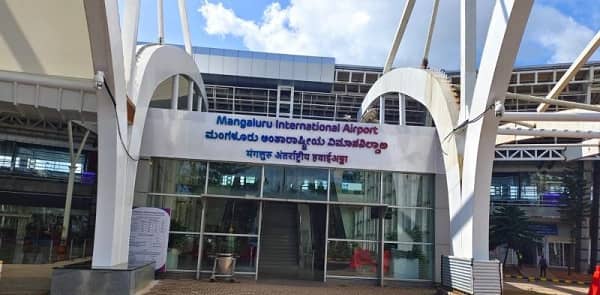
Quick Overview: Mangaluru International Airport
| Detail | Information |
| Official Name | Mangaluru International Airport (also: Mangalore International Airport) |
| Location | Bajpe, Mangaluru, Karnataka, India |
| Airport Type | Public — International |
| IATA Code | IXE |
| ICAO Code | VOML |
| Owner | Airports Authority of India (AAI) |
| Operator | Mangaluru International Airport Limited (MIAL) — Adani Group |
| Concession Agreement | February 2020; 50-year concession |
| Operating Base for | Air India Express; IndiGo |
| Opened | 25 December 1951 |
| Terminal | Single NITB (New Integrated Terminal Building) |
| Terminal Check-in Counters | 21 |
| Immigration Counters | 24 |
| Customs Checkpoints | 8 |
| Security Kiosks | 3 |
| Terminal Passenger Capacity | 500 inbound + 500 outbound simultaneously |
| Runway Designation | 06/24 |
| Runway Length | ~2,450 m (tabletop) |
| RESA | Extended to 240 m on both ends |
| ILS | CAT-I operational |
| Elevation | 103 m / 337 ft AMSL |
| Coordinates | 12°57′41″N, 74°53′24″E |
| Distance from City Centre | ~13–15 km northeast |
| Passengers (2024–25) | 23,43,032 (+15.4% YoY) |
| Aircraft Movements (2024–25) | 16,763 (+11.4% YoY) |
| Cargo Tonnage (2024–25) | 2,213 tonnes (+1.8% YoY) |
| Current Airlines | IndiGo, Air India Express, Air India, SpiceJet |
| Major International Routes | Dubai, Doha, Abu Dhabi, Muscat, Dammam, Bahrain, Sharjah |
| Expansion Investment | ₹5,200 crore (MIAL/Adani); new NITB 4,00,000 sq. metres |
Mangaluru International Airport Location: A Tabletop on the Western Ghats Foothills
Mangaluru International Airport is located at Bajpe, approximately 13 to 15 kilometres northeast of Mangaluru city centre. The official address is Bajpe Main Road, Kenjar HC, Mangaluru, Karnataka 574142. The airport sits on a plateau — a tabletop — carved out of the Western Ghats foothills at an elevation of 103 metres above mean sea level, but the surrounding terrain drops sharply on all sides. This tabletop character defines the airport’s most distinctive and most demanding physical feature: a runway that ends in steep drops, with minimal natural overrun area, requiring specific pilot certification and enhanced safety infrastructure.
The Western Ghats backdrop — visible from the approach path — and the proximity to the Arabian Sea make Mangaluru Airport’s setting visually dramatic. Pilots approaching from the sea side (runway 24 direction) descend over coastal Karnataka’s coconut-palmed landscape before touching down on the plateau. The monsoon months of June to September bring low cloud and reduced visibility that can disrupt landings despite the CAT-I ILS system.
Mangaluru’s economic identity as a Gulf-connected port city is central to the airport’s commercial character. The Dakshina Kannada and Udupi district diaspora in the UAE, Saudi Arabia, Kuwait, Oman, Bahrain, and Qatar has been building remittances back into Mangaluru’s economy for five decades — financing houses, businesses, education, and the city’s conspicuous real estate boom. The airport is their direct connection home. Gulf flight bookings at IXE rival the Gulf traffic at much larger airports in Kerala in terms of importance to the local economy.
Mangaluru International Airport Code: IATA IXE and ICAO VOML
The airport’s IATA code is IXE and its ICAO code is VOML. IXE is the booking identifier across all airline platforms for Mangaluru. VOML places it in the VO southern India block. The airport is operated by Mangaluru International Airport Limited (MIAL) — formerly Adani Mangaluru International Airport Limited, renamed after a Ministry of Corporate Affairs directive — under a 50-year concession agreement signed in February 2020. Adani Airport Holdings Limited (AAHL) manages the airport as part of its six-airport portfolio from the 2019 AAI privatisation round alongside Ahmedabad, Lucknow, Jaipur, Guwahati, and Thiruvananthapuram.
Mangaluru International Airport Terminal: The NITB and a Transformational Expansion
Current Terminal — NITB: The existing facility is the New Integrated Terminal Building (NITB), which handles both domestic and international operations under one roof. The terminal has 21 check-in counters, 24 immigration counters, 8 customs checkpoints, and 3 security kiosks, with a combined capacity of 500 inbound and 500 outbound passengers simultaneously. Despite the integrated layout, domestic and international flows are clearly segregated through signage and process lanes.
The terminal offers a range of commercial amenities including restaurants, duty-free shops, currency exchange, ATMs, a post office, newspaper vending machines, child care rooms, medical centres, and VIP lounges. Wi-Fi provides 2 hours of free access for domestic passengers using an Indian mobile number; international passengers can purchase scratch cards for extended high-speed access. The terminal operates 24/7.
The Tabletop Safety Profile: Mangaluru Airport’s tabletop runway has been at the centre of India’s most significant aviation safety improvement drive at a regional airport. The 2010 Air India Express Flight 812 crash — in which 158 of 166 people on board died when the aircraft overran the runway after a tail strike during landing — resulted in comprehensive safety upgrades. These include runway-end safety areas (RESA) extended to 240 metres at both ends (exceeding ICAO recommendations), engineered material arrestor systems to stop overrunning aircraft, CAT-I ILS enabling precision approaches in low visibility, enhanced runway lighting (high-intensity approach lights, PAPI systems), and DGCA mandatory simulator training requirements for all pilots operating into Mangaluru that include specific Mangaluru tabletop approach profiles. These upgrades make IXE one of the most safety-focused regional international airports in India.
Expansion Plan — ₹5,200 Crore NITB: MIAL’s comprehensive masterplan commits ₹5,200 crore to Mangaluru Airport’s expansion. The centrepiece is a new New Integrated Terminal Building of approximately 4,00,000 square metres — nearly 170 times the footprint of the current terminal — with an adjacent Multi-Modal Transport Hub (MMTH). A 48,600 square metre cargo complex is also planned. The Karnataka Urban Infrastructure Development and Finance Corporation (KUIDFC) was engaged to construct a new approach road connecting the new terminal to SH-66A. The project transforms Mangaluru Airport from a compact coastal gateway into a large-scale international hub capable of anchoring south India’s second aviation belt (alongside Kochi and Bengaluru).
Mangaluru International Airport Connectivity: Gulf Routes, Domestic Network and Gulf Expansion
By Air (Domestic): IndiGo operates more than 50 weekly non-stop domestic flights from IXE, connecting Mangaluru to Bengaluru (multiple times daily), Mumbai, Hyderabad, Chennai, and Delhi. Air India and SpiceJet also serve domestic routes. A third daily Bengaluru–Mangaluru sector was added in March 2026 specifically to feed international Gulf connections.
By Air (International): Gulf connectivity is Mangaluru Airport’s defining aviation characteristic. As of March 2026, active international routes include Dubai, Doha, Abu Dhabi, Muscat, Dammam, Bahrain, and Sharjah. Key developments in early 2026: Air India Express resumed the twice-weekly Mangaluru–Muscat service from 1 March 2026 after an eight-month suspension; Dammam flights were ramped from four to six weekly in March, moving to daily in April; Abu Dhabi daily service was restored by IndiGo after a prior frequency reduction; and Bahrain frequencies were temporarily doubled. Airport officials were in discussions with carriers for Jeddah service and additional Southeast Asian destinations in the winter 2026 timetable.
By Road: Pre-paid taxis and private cabs are the most reliable ground transport option, covering the 13 to 15 km from the airport to central Mangaluru in 30 to 45 minutes depending on NH-66 traffic. KSRTC city buses provide a budget option from the airport to the central bus stand. There is no metro or rail link to the airport. Arrive 4 hours before Gulf international departures and 2 hours before domestic departures.
By Rail: Mangaluru Central and Mangaluru Junction are the city’s two rail stations, connected to Mumbai, Bengaluru, Chennai, Kochi, and the Konkan Railway corridor. Neither is directly linked to the airport by shuttle or dedicated transfer; a cab from the airport to either station takes approximately 35 to 50 minutes.
Mangaluru International Airport Amenities: Gulf-Ready International Terminal
The NITB terminal provides a comprehensive amenity set for an international airport serving Gulf-bound diaspora travellers. Restaurants and cafes serve Mangalorean coastal cuisine alongside standard café formats. Duty-free outlets cover the standard range of perfumes, alcohol, confectionery, and electronics for international departures. Currency exchange and ATMs are available. A post office counter, flight insurance desks, and newspaper kiosks serve pre-departure needs. Medical facilities and child care rooms are in place. VIP lounges serve eligible passengers.
Baggage wrapping services are available. Wheelchair assistance is provided. Free trolleys are available throughout. Car rental services and pre-paid taxi counters operate in the arrivals hall. Wi-Fi is available free for 2 hours (Indian mobile number required for domestic passengers; scratch cards for extended international access).
The airport’s round-the-clock operations — essential for Gulf flights that frequently depart or arrive between 1 AM and 5 AM — make the 24/7 terminal staffing one of its most practically important characteristics. Gulf travellers from Dakshina Kannada often prefer to fly from Mangaluru rather than Bengaluru precisely because IXE puts the departure point close to home, even at unsociable hours.
FAQs: Mangaluru International Airport
Q1. What is the IATA code for Mangaluru International Airport?
A: The IATA code is IXE and the ICAO code is VOML. The airport is at Bajpe, approximately 13 to 15 km northeast of Mangaluru city centre, managed by Mangaluru International Airport Limited (MIAL) under the Adani Group.
Q2. What makes Mangaluru Airport’s runway distinctive?
A: It is a tabletop runway — built on a plateau with steep drops on all sides. This creates specific approach and departure challenges. After the 2010 Air India Express crash that killed 158 people, comprehensive safety upgrades were made including 240-metre RESA at both runway ends, engineered arrestor systems, CAT-I ILS, and mandatory DGCA simulator training for all pilots operating into IXE.
Q3. Which international destinations does Mangaluru Airport serve?
A: Gulf routes are the primary international focus: Dubai, Doha, Abu Dhabi, Muscat, Dammam, Bahrain, and Sharjah as of early 2026. Jeddah and Southeast Asian routes were in discussion for the winter 2026 timetable.
Q4. Who operates Mangaluru International Airport?
A: Mangaluru International Airport Limited (MIAL), formerly Adani Mangaluru International Airport Limited, operates the airport under a 50-year concession agreement signed with AAI in February 2020. MIAL is part of Adani Airport Holdings Limited (AAHL).
Q5. What is the expansion plan for Mangaluru Airport?
A: MIAL has committed ₹5,200 crore to expand the airport, with a new NITB terminal of approximately 4,00,000 square metres, a 48,600 square metre cargo complex, and a Multi-Modal Transport Hub (MMTH). A new access road from SH-66A to the new terminal is being constructed by KUIDFC. The expansion will transform Mangaluru into one of south India’s major aviation hubs.