Nashik is a city of at least three distinct identities that generate aviation demand in three completely different ways. For pilgrims, it is one of the four sites of the Kumbh Mela — and hosts the Simhastha Kumbh Mela, drawing tens of millions of devotees every twelve years to bathe at the Panchvati ghats on the Godavari River. For wine enthusiasts, the Nashik Valley is India’s Napa — Sula, York, and dozens of other vineyards produce the majority of the country’s quality wine on slopes around the city. And for defence aviation, HAL’s Nashik plant at Ozar is where India’s MiG-21s and Sukhoi Su-30 MKI aircraft are assembled. Nashik International Airport sits within that HAL complex — owned by Hindustan Aeronautics Limited, operated by HALCON (a joint venture of HAL and Container Corporation of India), carrying IATA code ISK and ICAO code VAOZ, and recording 4,21,887 passengers in 2025–26, a 24.9% jump. It is the only airport in India operated by a defence manufacturer, and its cargo division is expanding faster than its passenger numbers.
Quick Overview: Nashik International Airport
| Detail | Information |
| Official Name | Nashik International Airport (also: Ozar Airport) |
| Location | Ozar, Nashik district, Maharashtra, India |
| Airport Type | Military/Public — International (cargo) + Domestic (passengers) |
| IATA Code | ISK |
| ICAO Code | VAOZ |
| Owner | Hindustan Aeronautics Limited (HAL) |
| Operator | HALCON (HAL + CONCOR joint venture) |
| Opened | 1964 |
| Terminal Inaugurated | 3 March 2014 |
| Terminal Area | 8,267 sq. metres |
| Terminal Capacity | 300 peak-hour passengers |
| Civil Apron | 5–6 aircraft stands (A1–A5); supports A320 and ATR-72 class |
| Elevation | 608 m / 1,995 ft AMSL |
| Coordinates | 20°07′10″N, 73°54′49″E |
| Distance from City Centre | ~20–22 km northeast |
| Passengers (2025–26) | 4,21,887 (+24.9% YoY) |
| Cargo (2024–25) | 4,161 tonnes (international) |
| Cargo (H1 2025–26) | 4,058 tonnes (+250% YoY, international) |
| HALCON Cargo Target (2025–26) | 7,000 tonnes via 400 dedicated cargo flights |
| Current Airlines | IndiGo, Alliance Air |
| Active Domestic Routes | Delhi, Mumbai, Bengaluru, Pune, Hyderabad |
| New Runway | Announced March 2025 by HAL (parallel runway) |
| New Terminal | Announced October 2025 (ahead of Simhastha Kumbh 2027) |
Nashik Airport Location: HAL’s Ozar Complex, 20 km From the City
Nashik Airport is located at Ozar, approximately 20 to 22 kilometres northeast of Nashik city centre. The coordinates are 20°07′10″N, 73°54′49″E, at an elevation of 608 metres above sea level — the elevated plateau of the Western Ghats’ northeastern ridge. The airport is adjacent to National Highway 3 (the old Mumbai–Agra highway), giving it direct highway connectivity that HALCON uses extensively for cargo ground transport.
The setting within HAL’s industrial campus is unlike any other commercial airport in India. Aircraft being assembled or tested for the Indian Air Force share the facility with commercial passenger flights and international cargo freighters. The 11 Base Repair Depot of the IAF — responsible for MiG-21, MiG-23, and MiG-29 overhauls — is on the same premises. Passengers arriving or departing occasionally see fighter aircraft on adjacent aprons.
Nashik’s proximity to Mumbai (approximately 165 km) and Pune (approximately 200 km) gives the airport a useful catchment for travellers from the Nashik-Dhule-Jalgaon corridor who would otherwise drive to these metros for flights. Sula Vineyards — the most visited winery in India — is approximately 32 km from the airport, making ISK the practical air entry for wine tourism to the Nashik Valley.
Nashik Airport Code: IATA ISK and ICAO VAOZ
The IATA code is ISK and the ICAO code is VAOZ. ISK was previously associated with Gandhinagar Airport in Nashik Road area (which was taken over by the Indian Army) — the code was transferred to Ozar upon Gandhinagar’s closure for commercial use. VAOZ places the airport in the VA western India block.
Nashik Airport Terminal: A 2014 Building With 2027 Kumbh Ambitions
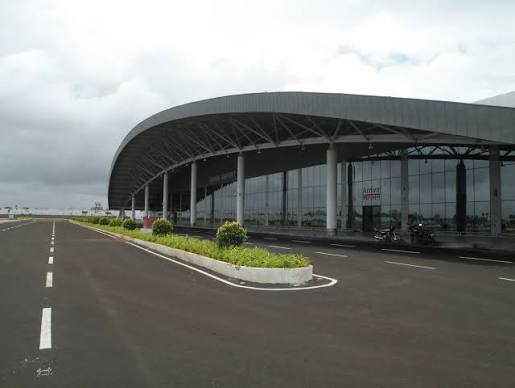
The current terminal was inaugurated on 3 March 2014, replacing the earlier limited commercial functions at Gandhinagar. It covers 8,267 square metres and is designed to handle 300 peak-hour passengers — a compact but modern facility with air conditioning, integrated baggage handling system, Flight Information Display Systems (FIDS), CCTV surveillance, fire and safety systems, public address systems, and a Building Management System.
The terminal has a departure lobby, check-in counters, security checkpoints, holding lounges, VIP areas, retail outlets, childcare rooms, and accessible facilities for differently-abled passengers. The civil apron handles up to five aircraft simultaneously (stands A1 to A5) and supports both ATR-72 class turboprops and Airbus A320 class narrow-body jets on a concrete surface rated PCN 72.
Two major infrastructure announcements in 2025 point to a significantly expanded Nashik Airport in the coming years. In March 2025, HAL announced plans to develop a parallel runway alongside the existing one — which would transform the airport’s capacity and allow simultaneous military and commercial operations without interference. In October 2025, the Maharashtra government announced plans for a new, larger passenger terminal building specifically to accommodate the surge in pilgrim traffic expected for the Simhastha Kumbh Mela beginning in October 2026, with a construction tender floated in June 2025 targeting completion before the event. HALCON’s plan is to increase the terminal’s peak-hour capacity from 300 to 1,000 passengers.
Nashik Airport Connectivity: IndiGo and a Booming Cargo Division
By Air (Passengers): IndiGo is the dominant scheduled carrier at Nashik, operating daily direct flights to Delhi (from May 2024) alongside connections to Mumbai, Bengaluru, Pune, and Hyderabad. Alliance Air also serves routes under the UDAN framework. The 2025–26 passenger count of 4,21,887 — a 24.9% jump — reflects consistent growth as Nashik’s residential and corporate base increasingly prefers flying to highway driving. Confirm current schedules and frequencies before booking.
By Air (Cargo): This is where Nashik Airport’s growth story becomes genuinely remarkable. HALCON handled 4,161 metric tonnes of international cargo in 2024–25 across 250 dedicated cargo flights. In the first half of 2025–26 alone, international cargo surged 250% to 4,058 tonnes via 229 flights. HALCON has set a target of 7,000 metric tonnes for the full 2025–26 year through 400 dedicated cargo flights — a target that would make Nashik one of the fastest-growing cargo airports in India. The cargo catchment includes Nashik’s pharmaceutical, engineering, and grape export industries, as well as wine exports to international markets.
By Road: Taxis, Ola, and Uber connect the airport to Nashik city in approximately 30 to 45 minutes via NH-3. NMPML Citilinc city buses run from the airport at ₹40 to ₹60. Mumbai is approximately 165 km (3 hours), Pune approximately 200 km (3.5 to 4 hours), and Shirdi approximately 90 km (1.5 hours) by road.
By Rail: Nashik Road Railway Station is approximately 30 km from the airport — the junction on the Central Railway’s Mumbai–Manmad line with connections to Mumbai, Pune, Hyderabad, and Delhi.
Nashik Airport Amenities: Functional Terminal With Modern Systems
The 2014 terminal delivers a clean and functional passenger experience. Check-in counters handle IndiGo and Alliance Air processing. The integrated baggage handling system reduces wait times. Wi-Fi is available. A small cafeteria serves snacks, beverages, and light meals. Retail outlets carry travel essentials and basic souvenirs. First aid is available. The terminal operates with FIDS for real-time flight updates. Restrooms are maintained. Parking is available near the terminal for private vehicles.
The airport’s relatively compact size means processing is fast — security to gate in under 20 minutes at off-peak times is common. For wine tourists heading to Sula or York Winery, this is the smoothest airport entry into the Nashik Valley.
FAQs: Nashik International Airport
Q1. What is the IATA code for Nashik Airport?
The IATA code is ISK and the ICAO code is VAOZ. The airport is at Ozar, approximately 20 to 22 km northeast of Nashik city, owned by HAL and operated by HALCON (HAL + CONCOR).
Q2. Who owns and operates Nashik Airport — and what is HALCON?
HAL (Hindustan Aeronautics Limited) owns the airport. HALCON is the operating joint venture between HAL and CONCOR (Container Corporation of India), managing both passenger services and the rapidly growing international cargo operations.
Q3. What new infrastructure is planned at Nashik Airport?
Two major projects: a parallel runway announced by HAL in March 2025, and a new, larger passenger terminal announced by the Maharashtra government in October 2025 (tender June 2025) targeting completion before the Simhastha Kumbh Mela in October 2026. The new terminal aims to expand peak-hour capacity from 300 to 1,000 passengers.
Q4. Why is Nashik Airport’s cargo division growing so fast?
HALCON is actively building Nashik as a cargo hub — handling pharmaceutical, engineering, grape, and wine exports from the Nashik-Dhule region. International cargo in the first half of 2025–26 jumped 250% year-on-year. The airport’s proximity to NH-3, 24/7 operations, and competitive pricing are key commercial advantages.
Q5. How far is Nashik Airport from Sula Vineyards?
Sula Vineyards is approximately 32 km from the airport — about 45 to 55 minutes by taxi. Nashik Airport (ISK) is the primary air entry for wine tourism to Maharashtra’s Nashik Valley.